Bensalem Quality Roofing has handled roofing in Yeadon for homeowners and landlords who want a plain account of what their roof needs, backed by more than 20 years of tearing off, repairing and rebuilding roofs across the region. Most of the calls we take start with a question rather than a project: is that shingle supposed to look like that, and is the stain on the ceiling getting bigger?
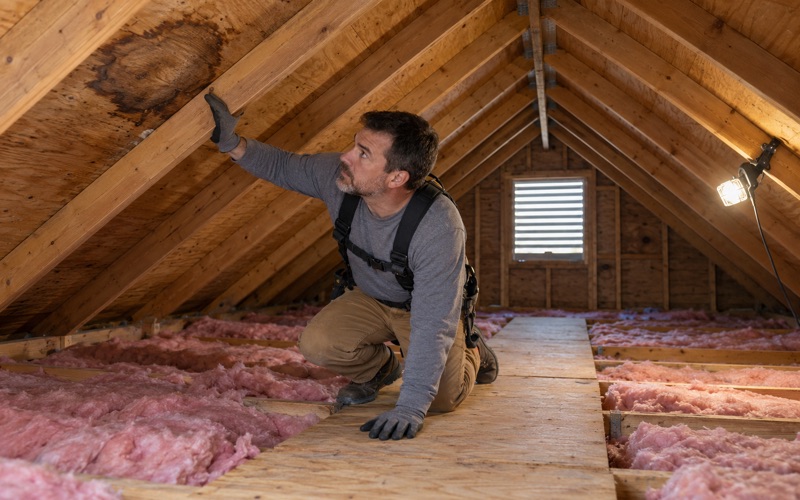
We answer that question on the roof and in the attic. Every leak visit includes a look at the underside of the decking, because water rarely drips straight down from where it enters, and tracing the actual path is what keeps a quote honest. If the roof can be repaired, we say so first, before replacement ever comes up in the conversation.
This page is about one kind of damage in particular: wind. Not the brief, violent gust of a summer thunderstorm, but the long, grinding wind of a coastal storm that keeps pushing on a roof for most of a day. That is the storm that tests shingle seals, ridge caps and flashing, and it is the one the borough has a recent record of.
March 2, 2018: The Nor’easter That Took Down Yeadon’s Trees
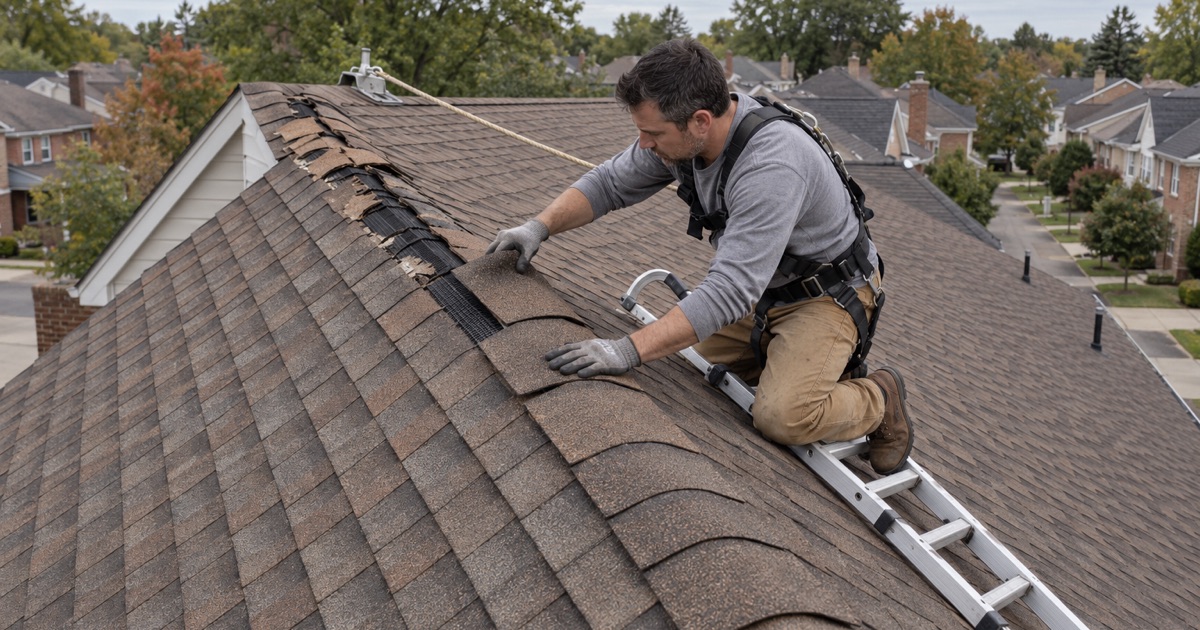
Plenty of storms pass through Delaware County without leaving much of a record behind. The nor’easter of March 2, 2018 left one, and it is worth knowing because of what it was and what it was not. It was a wind event first, and the borough said so plainly while it was still under way.
What the Borough Said the Next Day
On March 3, 2018, Yeadon posted a winter weather alert signed by Mayor Hepkins. The notice said that “the most dangerous part of the storm is high winds gusts,” that “many trees are down” and that the borough was “experiencing some rolling power outages as a result.” Residents were asked to stay in if they did not have to travel, and the notice gave the PECO outage line.
That is a clear thing for a borough of 12,054 people to put in writing. A local government that warns about wind rather than snow or water is telling you which part of the storm did the damage. For a roof, that distinction matters, because wind and water find different weak points.
A Wind Storm Without a Flood
Nothing in the March 2018 notice mentions flooding, and that shapes what a homeowner should look for afterward. A flood question is about what sits low on the lot. A wind question is about what sits high on the house, starting at the ridge and working down to the eaves.
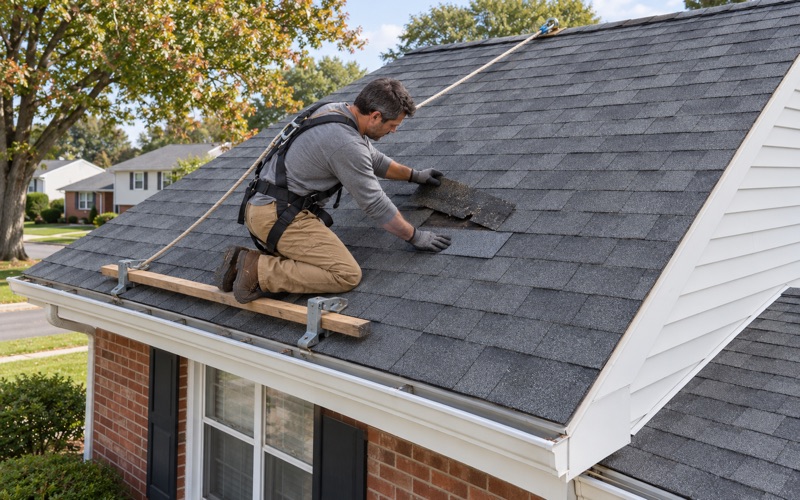
When the trouble is wind, the usual suspects are the edges and the high points of the roof. Shingle tabs along the rakes, the caps that cover the ridge, and the flashing where a roof plane meets a wall or chimney all take the force first. Those are the places we start on any inspection that follows a long wind.
What Was Not Recorded
We want to be careful about what the record actually shows. No gust was measured in Yeadon itself during that storm, and no roof damage in the borough from March 2018 is on record anywhere we have found. What exists is the borough’s own warning and a set of readings from stations nearby.
That gap is why we do not tell anyone their roof was hurt by that storm. What we can say is that this type of storm is the type that lifts shingles, and that a roof which went through it, and several winters since, deserves a look at the parts wind works on hardest.
Looking for roofing closer to Lansdowne? See Lansdowne Roofing.
What the Gauges Around Yeadon Measured
The National Weather Service office in Mount Holly gathered spotter and station reports after the storm. Its public information statement, issued the afternoon of March 3, 2018, covered unofficial observations over the previous 53 hours. Yeadon sits within that office’s forecast zone PAZ070.
Philadelphia International Airport and Northeast Philadelphia
Two of the Pennsylvania readings came from automated airport stations across the city line. Northeast Philadelphia logged a gust of 62 mph during the afternoon of March 2. Philadelphia International Airport logged 59 mph late that night.
Look at the timing as much as the speeds. One station peaked midafternoon and the other peaked late at night, hours apart. That spread is the signature of a nor’easter: the wind does not arrive and leave, it settles over the area and keeps gusting.
The Delaware County Reading
The only Delaware County gust listed came from a weather station east of Newtown Square, which recorded 56 mph during the evening of March 2. That reading falls between the two Philadelphia peaks on the clock. Taken together, the three stations describe an afternoon and evening of strong gusts across the whole area rather than one sharp burst.
None of those three readings is a Yeadon number, and we will not dress any of them up as one. They are the nearest measured wind speeds we know of for that storm, and they tell a homeowner roughly what the area was dealing with that day.
Why We Read Nearby Gusts This Way
A borough without its own gauge still gets weather, and the honest approach is to use the closest measurements as a range rather than a verdict. Wind speed varies block to block with trees, building height and open ground. Two houses on the same street can see different gusts.
So when we talk with an owner about storm wear, we use those numbers to explain why we are checking certain parts of the roof. We do not use them to claim a specific roof saw a specific speed. The roof itself is the evidence, and we would rather read it directly.
Hours of Gusts: What a Long Wind Does to Shingles and Ridge Caps
A thunderstorm gust might last seconds. A nor’easter repeats its gusts for hours, so the same edge of the same shingle gets lifted and dropped again and again. Damage from that kind of storm is often quiet: nothing blows off, but things come loose.
Lifted Shingle Tabs
Asphalt shingles hold down partly by a strip of adhesive that bonds each course to the one below it. Repeated lifting can break that bond without tearing the shingle, leaving a tab that looks fine from the sidewalk but flaps in the next storm. On older roofs, where the adhesive has aged, the bond gives way more easily.
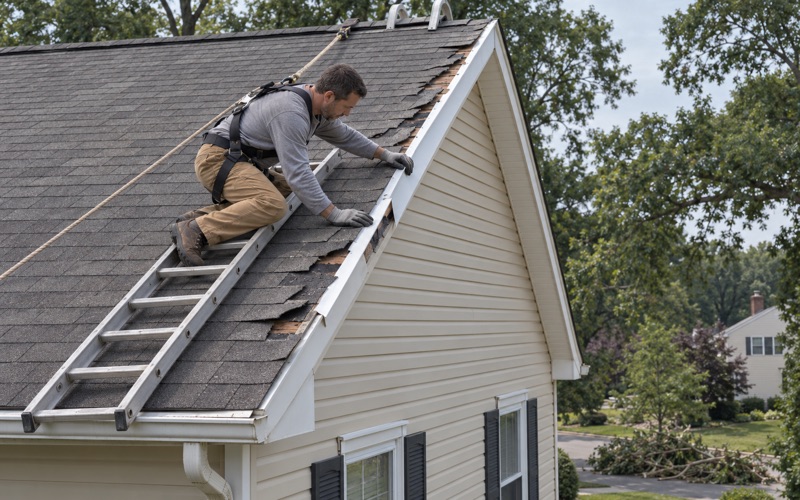
We check for broken seals by hand along the rakes, the eaves and the upper courses, where wind pressure runs highest. A tab that has lost its seal can often be resealed or replaced individually. When it is a pattern across a whole slope, that is a different conversation, and we explain why before anyone talks about cost.
Ridge Caps
The ridge is the highest and most exposed line on a pitched roof, and its cap shingles are bent over the peak and nailed through. Hours of wind can crack those caps at the bend or work their nails loose. A missing cap opens the ridge itself, and on a roof with a ridge vent, that opening leads straight to the attic.
After a wind storm, we walk the ridge and look at each cap and the vent beneath it. We also check the soffit intake below, because a vent system works as a pair. A ridge that was patched in a hurry after an earlier storm is something we point out rather than quietly cover over.
Flashing at Walls, Chimneys and Pipes
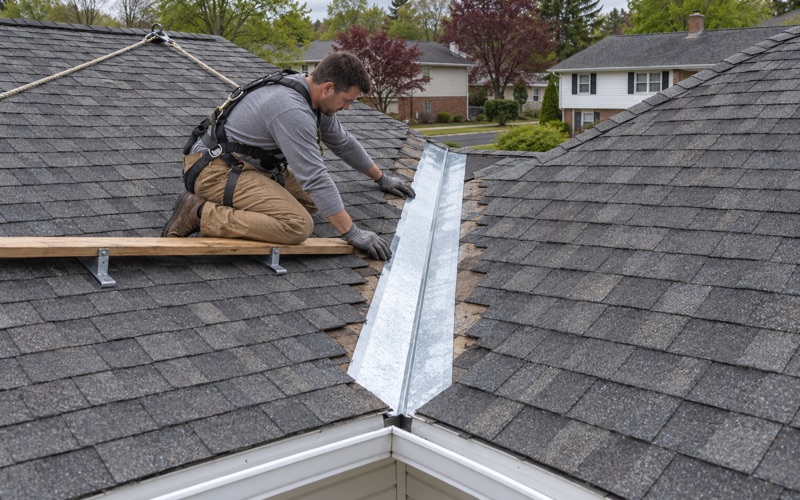
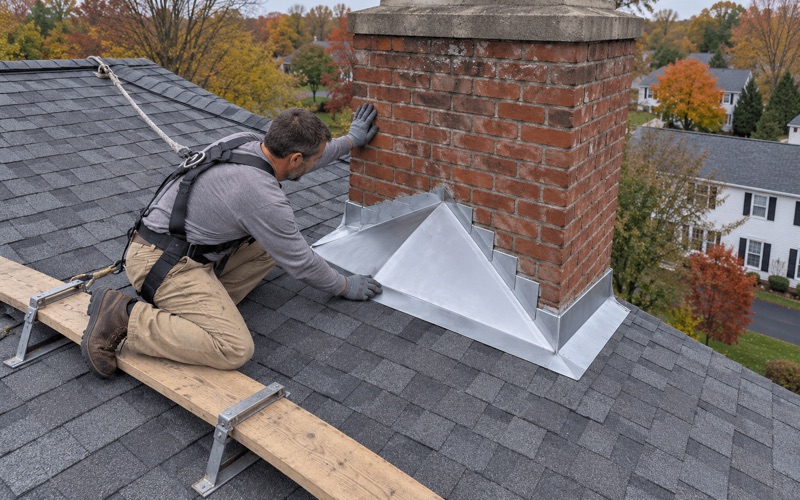
Flashing is the metal and membrane that seals joints where water would otherwise get in: along a sidewall, around a chimney, at pipe boots and at the drip edge. Wind gets under an edge that was already loose and bends it a little further each gust. Once the edge lifts, rain driven sideways by the same storm follows it in.
This is often where the attic look pays off. A stain on the rafters next to a chimney, or a damp spot below a pipe, usually points to flashing rather than shingles. When we replace a roof, step, counter and chimney flashing are replaced with it instead of reused under new material, because old metal is where new leaks begin.
Limbs, Lost Power and the Roof Check That Follows
The mayor’s notice tied two things together: many trees down, and rolling power outages as a result. Both affect a roof, and both shape the order in which a careful owner should deal with the aftermath of a storm like March 2018.
Limbs on the Roof
A falling limb does obvious damage when it lands hard, but a smaller branch that skids across the roof can do quieter harm. It can scuff off the granules that protect asphalt from sunlight, crack a ridge cap or bend a gutter hanger. A limb left lying on the roof also holds moisture and debris against the shingles.
Do not climb up to clear branches yourself, especially on a wet or icy roof after a winter storm. We remove what is up there, then look underneath it, because the spot a limb covered is the spot most likely to be damaged. Gutters get checked at the same time, since debris from a wind storm tends to end up in them.
When the Power Comes Back
During an outage, most people are thinking about heat and food, not the attic. Once the lights are back, it is the right time to go upstairs with a flashlight. Look for daylight through the decking, damp insulation, or fresh drips along the rafters.
If you find anything, note where it is and take a photo. That gives us a starting point when we come out, and it helps separate new storm damage from older wear. Older houses make up a large share of the borough’s homes, with 2,730 of 5,573 units built before 1950, so many attics hold years of history to read through.
Getting a Yeadon Roof Looked At After a Nor’easter
When you call us after a wind storm, the visit follows the same pattern every time: attic first, then the roof, with the ridge, rakes and flashing checked by hand. You get a straight answer on whether repair will do. If the work needs a permit, we check the rule for your own municipality before pricing anything, since each borough and township sets its own.
If you plan to file with your insurer, we photograph the damage and write it up for your own claim, and we will meet the adjuster on site when asked. We do not negotiate the claim or tell you what a policy will pay. Any written scope we hand you lists tear-off, decking, underlayment, flashing, ventilation and gutters as separate lines, so you can compare it against another estimate line by line.
- 20+ Years Experience
- Attic Checked on Every Leak
- Itemized Written Scopes