Bensalem Quality Roofing handles roofing in Mount Holly with 20+ years in the trade behind every estimate, and we start with a question most quotes skip: who is actually paying for the roof? For a lot of owners here, part of the answer may sit with a township repair program rather than a savings account. That changes how the paperwork should look long before anyone climbs a ladder.
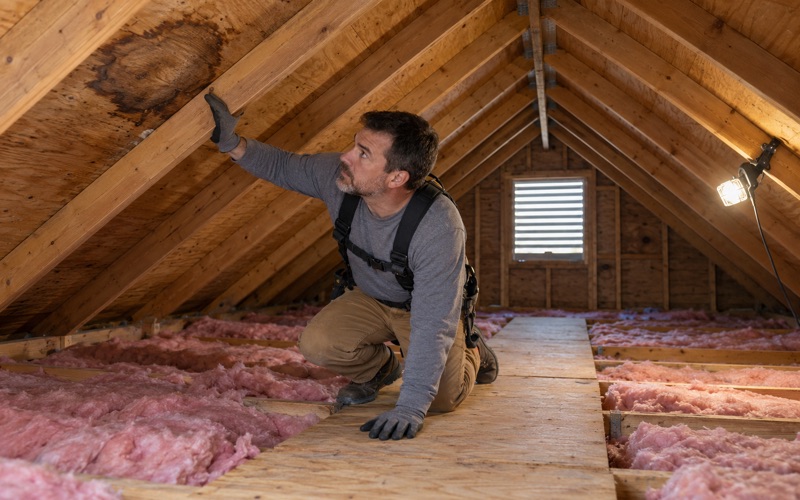
Our part stays the same whichever way the money comes. On a leak call we go into the attic as well as onto the roof, tracing the water to where it actually enters before anything is priced. Then you get a plain answer on whether the roof can be repaired, and only after that do we talk about a full replacement.
This page covers the Housing Rehabilitation Program as its administrator describes it, who the posted rules say can apply, and why so many roofs here could end up on that list. We are not part of the program and have no say in it. What we can do is help an owner understand the roof well enough to make a sound application or a sound private decision.
What Mount Holly’s Housing Rehabilitation Program Pays For
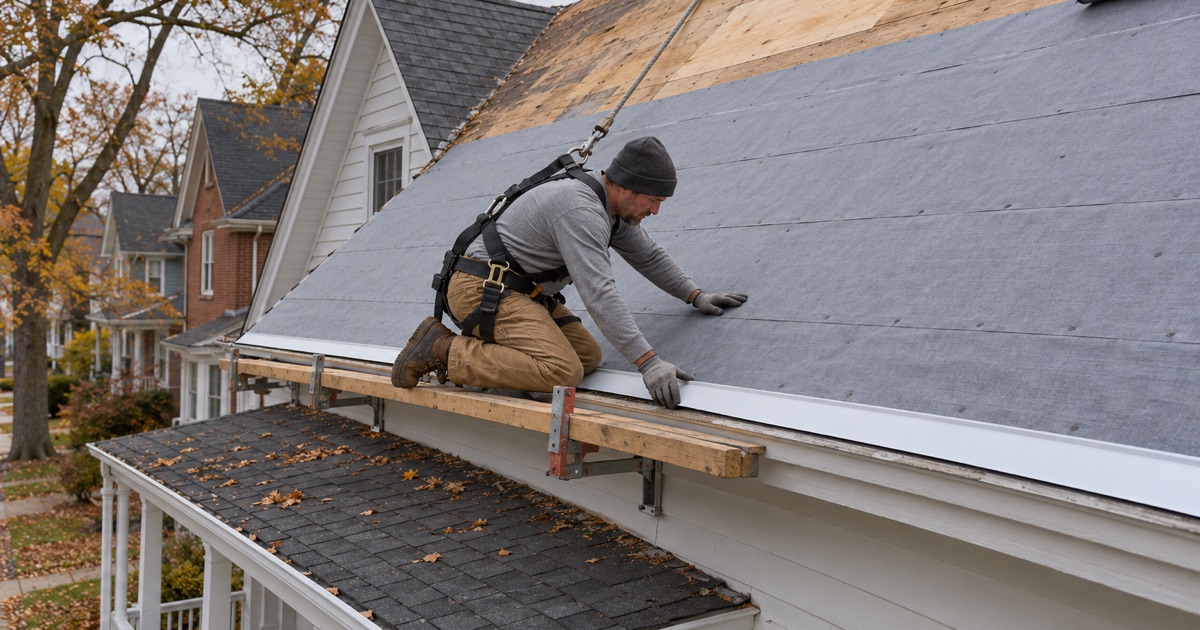
Roofs head the list of eligible work
Mount Holly runs a Housing Rehabilitation Program for owners who live in their own homes, and roofs are the first item on its list of eligible repairs. The same list names heating and electrical systems, plumbing components, foundations, weatherization and lead-based paint hazard remediation. The program is administered by Community Grants, Planning & Housing, which lists Mount Holly among its current municipal programs.
That list matters for how a roof is scoped. A roof rarely fails alone: a long-running leak can soak insulation, stain ceilings and reach wiring in the attic, and those touch systems the program also names. Seeing the whole picture before an application is filed gives the owner a clearer idea of what the house needs, ranked by urgency.
How a deferred, no-interest loan works
The program page says an eligible owner can receive repairs worth up to $25,000, and that “funds are provided as a no interest (0%) deferred loan.” It also says plainly that there are no monthly payments. For a household that cannot carry a new roof on a credit card or a bank loan, that structure is the whole point.
A deferred loan is still a loan, not a grant: the word means repayment is put off, and the program page does not say that it is ever erased. That is why we never call a program-funded roof free. It is also why an owner should read the loan documents themselves, start to finish, before signing anything.
What the program page leaves unsaid
Some important terms are not on the public page. It does not state whether any part of the loan is forgiven over time, how long the term runs, or whether a lien is placed on the property. Those answers belong to the administrator, not to a roofing contractor, and they can change how an owner thinks about selling or refinancing later.
A funded roof is also a public-money job with its own contractor process, and the details of that process belong to the administrator. We don’t guess at them. If you are weighing the program, call Community Grants, Planning & Housing at 609-664-2769 ext 9 and put your questions about terms and steps to the people who run it.
Looking for roofing closer to Warwick Township? See Warwick Township Roofing.
Who Qualifies: Owner-Occupants and the Income Limits
Living in the house you own
The eligibility rules on the program page are short. You must live in Mount Holly, you must own the home, and your gross household income must fall below the limit for your household size. All three apply together, so the program is written for owner-occupied houses and the people who live in them.
That describes a large share of the town. Of the 3,414 occupied homes counted by the ACS 2024 five-year estimates, 2,067 are owner-occupied. Not every one of those households will fall under the income line, and the program promises a place to nobody, but the pool of owners it is written for is a big one.
The posted income limits
The current limits run from $68,750 for a one-person household to $78,550 for two, $88,350 for three and $98,150 for four. Larger households have higher ceilings, rising to $106,050 for five, $113,900 for six, $121,750 for seven and $129,600 for eight. The test uses gross household income, so add up every earner in the home before ruling yourself in or out.
Those numbers are higher than many owners expect. A retired couple, a single parent or a two-earner household on modest wages may sit under them. The program says there is no cost to apply, so checking with the administrator is cheaper than assuming you would not qualify and paying for the whole roof out of pocket.
Limits are updated every year
The program page notes that its income limits are updated annually. A household that sat just over the line last year may fall under it this year, and the reverse is possible too. Before you rule the program in or out, check the figures the administrator is publishing now rather than a number a neighbor quoted.
Timing a roof decision around that update is reasonable only when the roof can wait. If water is already coming in, a temporary repair to stop it protects the ceilings and insulation while the paperwork moves. We’ll tell you honestly whether the roof can hold through a season or whether it is already past that point.
Old Houses, Worn Roofs and What Tear-Off Finds
A town built early
Mount Holly is the county seat of Burlington County, settled in 1677 and incorporated as a township on February 21, 1798. The housing stock shows that age. According to ACS 2024 five-year estimates, 1,089 of the township’s 3,683 housing units, or 29.6%, were built in 1939 or earlier, and another 956 date from the 1950s.
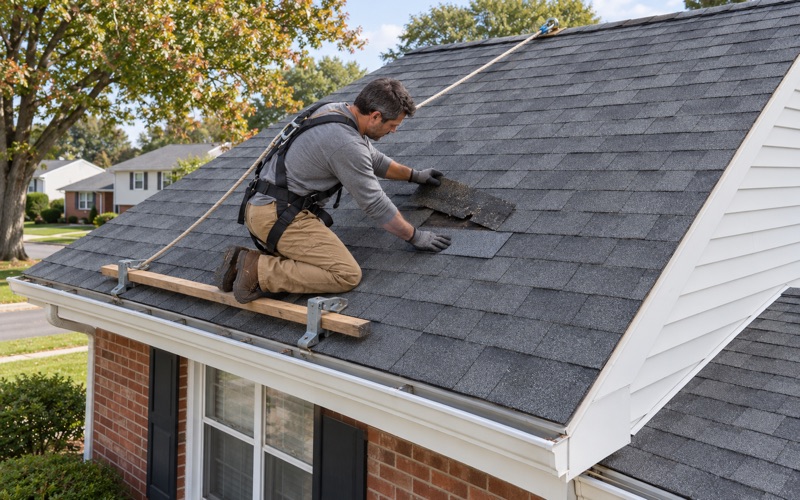
Houses that old have usually been re-roofed more than once, and each pass can leave something behind: patched decking, tired flashing, or a layer that was never fully removed. On a house built before 1940, a roof that looks like a simple shingle job from the street can turn into decking and framing repair once the old material comes off.
Slate, chimneys and the code on old roofs
At least one older brick house still carries slate: a High Street listing describes a brick exterior with a slate roof and stained glass windows. New Jersey’s residential code does not allow a new covering to be laid over slate, so changing material on a house like that means a full tear-off down to the deck. On a program-funded job, that cost belongs in the estimate from the start.
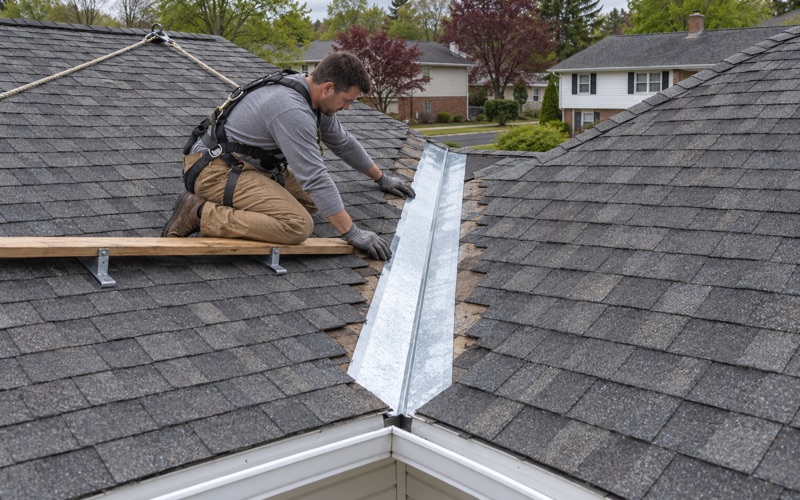
Chimneys are the other weak point. One Garden Street owner has written that acid from coal heat eroded his 1830 house’s brick chimney until it collapsed with part of the wall sometime after 1911. That is one house, not a survey, but it is why we replace step, counter and chimney flashing with every roof and look hard at the masonry it ties into.
What we find once the old roof is off
Decking damage on an old house is rarely visible from the ground. When we find soft or rotted sheathing after tear-off, we photograph it and show it to you before it is replaced, and the per-sheet price is already set in the contract. Nothing about the decking is decided on the day without you seeing it first.
That record also helps an owner working through a program, because it shows what was found and why the work changed. Our written scope lists tear-off, decking, underlayment, flashing, ventilation and gutters as separate lines, so an administrator, a family member or a second contractor can compare it item by item against any other estimate.
Applying Before the Money Runs Out
Funding is limited
The program page is blunt about it: “FUNDING IS LIMITED-SO DON’T WAIT!” A limited pool means money spent on one house is not there for the next, and the page does not say how much is left this year or when intake closes. An owner who suspects a roof is near the end of its life gains nothing by waiting for the first big leak to apply.
Applying early does not mean replacing early. It means knowing the condition of the roof, getting the application in, and letting the administrator decide eligibility on its own timeline. Meanwhile a sound repair can keep the house dry, and we’ll say so if a repair is really all the roof needs.
Bringing a clear picture of the roof
A roof problem is easier to explain to an administrator when the owner has evidence in hand. After an inspection we give you photos of the roof surface, the flashing and the attic side of any leak, along with a written description of what we saw. That is useful whether the roof ends up paid for by the program, by insurance or by the owner.
If storm damage is part of the picture, we photograph it and write it up for your own insurance claim, and we’ll meet the adjuster on site if you ask. We do not negotiate the claim. Keeping the storm question and the program question separate helps you avoid counting the same repair twice.
Jobs written to New Jersey’s rules
We work on both sides of the Delaware, and a Mount Holly roof is written to New Jersey’s rules, not Pennsylvania’s. Re-roofing a detached one- or two-family house is treated as ordinary maintenance under the state’s construction code, and we still check the township’s own requirements for the specific house before the job is priced.
Sales tax and paperwork follow New Jersey practice as well, including the Form ST-8 capital improvement certificate where it applies. Gutters and downspouts are sized and pitched with the new roof rather than added afterward, and at the end of each work day the driveway, yard and gutters are cleaned, with a magnet sweep for nails before we leave.
- 20+ Years Experience
- Attic Checked on Every Leak
- Itemized Written Scopes