Bensalem Quality Roofing has handled roofing in Lumberton and across the river for more than 20 years, and a growing share of our calls from this township come from people who own a house they rent out. When the roof on a rental leaks, the owner is working against two clocks at once: the tenant who needs the ceiling dry now, and the township’s own rules for the next lease.
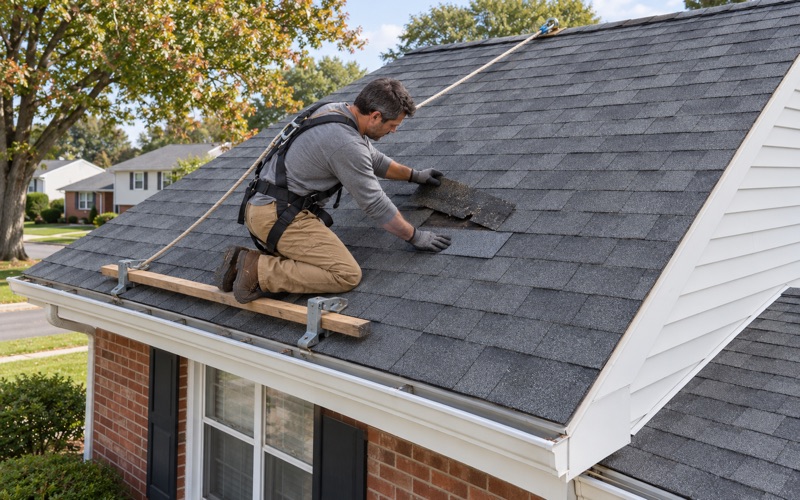
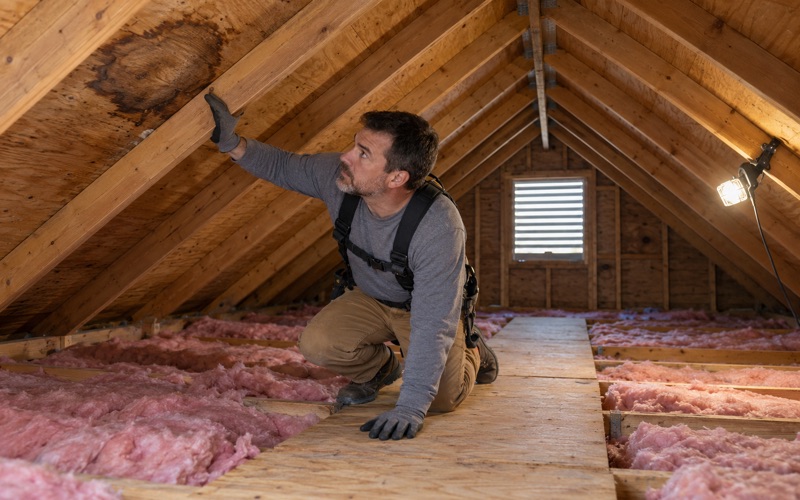
Our work on those calls starts the same way every time. We go into the attic as well as up on the shingles, because a stain over a bedroom closet rarely sits right under the spot where the water gets in. Only after the path of the leak is traced do we put a price on fixing it.
This page is written for Lumberton landlords, property managers and owners weighing whether to rent. It covers how the township registers rentals, what changed this year, what the property maintenance rules say about a roof, and how to fit roof work into the gap between one tenant leaving and the next moving in.
How Lumberton Registers a Rental, and What Changed This Year
Every rental unit goes on the township’s list
Lumberton requires every rental property to register its units with the township. Registration does not end with a form: on registration, all units become subject to an inspection for compliance with the BOCA Property Maintenance Code, the standard the township’s own rental page cites. The township’s inspection request form lists single-family dwellings, duplexes and apartment units among the premises it covers.
That reaches further here than a newcomer might guess. Of the 4,787 occupied homes in Lumberton, 1,283 are rented, according to the Census Bureau’s 2024 five-year American Community Survey. That is 26.8 percent of occupied homes, so the rules below touch a large slice of the township’s houses rather than a handful of buildings.
Ordinance 2026-05 and the annual statement
On April 2, 2026, the Township Committee adopted Ordinance 2026-05 after a final reading and public hearing. It amends Chapter 232 of the township code, Registration of Rental Units, so that the owner of every residential rental property files a rental property registration statement every year. The cost is $175, filed with the township Department of Inspections, with copies going to the Lumberton Police Department and the Fire Chief.
The ordinance was introduced on March 5, 2026, so owners who registered under the older system may be meeting the annual statement for the first time this year. We cannot speak to how the township handles the transition, and we will not guess at any fee beyond the $175 the ordinance states. The Department of Inspections is the office that answers those questions.
Why a roof belongs in the rental file
An annual registration means the township knows every year which houses are rented and who is responsible for them. The township’s rental registration form already asked for the owner, a managing agent or emergency contact, and the regular maintenance service. A roofer is not on that form, but a roof leak is one of the repairs a tenant can neither fix nor ignore.
Looking for roofing closer to Moorestown? See Roofing Services in Moorestown.
The Inspection at Each Change in Tenancy
Inspected before anyone moves in
Lumberton’s rental registration page says that after registration, the property is subject to inspection at a change in tenancy before occupancy can take place. In practice, the window between leases is also the window in which the house is looked at against the property maintenance code. A turnover is a scheduled event rather than a surprise, and it can be planned around.
For an owner, the useful habit is to treat the move-out date as the deadline for any open roof question. A leak the outgoing tenant reported, a few shingles in the yard after a windy week, or a gutter pulling away from the fascia are all easier to settle while the rooms are empty than after new furniture is in place.
What Chapter 221 asks of a roof
The township’s Property Maintenance chapter, Chapter 221 of the Lumberton code, requires roofs to be maintained or repaired so they are structurally sound and free from defects. That is a general standard rather than a list of specific conditions, and we have not seen any Lumberton inspection report that names a roof item. We will not tell an owner what an inspector will or will not write up.
What we can do is describe the roof as it actually is. A roof that is structurally sound and free from defects is also the roof a tenant does not call about during a storm, so the code standard and good maintenance point the same way. Our findings note the deck, the covering, the flashing and the drainage separately, in plain language an owner can keep on file.
A certificate on compliance
The rental page states that a Certificate of Occupancy will be issued upon compliance. The township’s inspection request form describes a Certificate of Approval issued after inspection for compliance with the New Jersey State Housing Code and township ordinances. Either way, the document follows a passed inspection, which is why the timing of any roof repair ahead of that visit matters.
Leaks, Stains and Gutters Your Own Walk-Through Can Find
Ceiling stains and what the attic shows
Between tenants, walk the house yourself before anyone else does. Brown rings on a top-floor ceiling, peeling paint near an exterior wall, or a musty closet under a roof valley usually mean water has been getting in for a while. Tenants often live with a small stain for months without mentioning it, so a turnover may be the first time an owner sees one.
When we come out, the attic tells the rest of the story. Wet or darkened decking, rusted nail tips, damp insulation and daylight around a vent pipe show where the water enters and how long it has been doing so. That is the difference between a repair priced to the real cause and one that paints over the stain and leaves the leak.
Gutters and downspouts
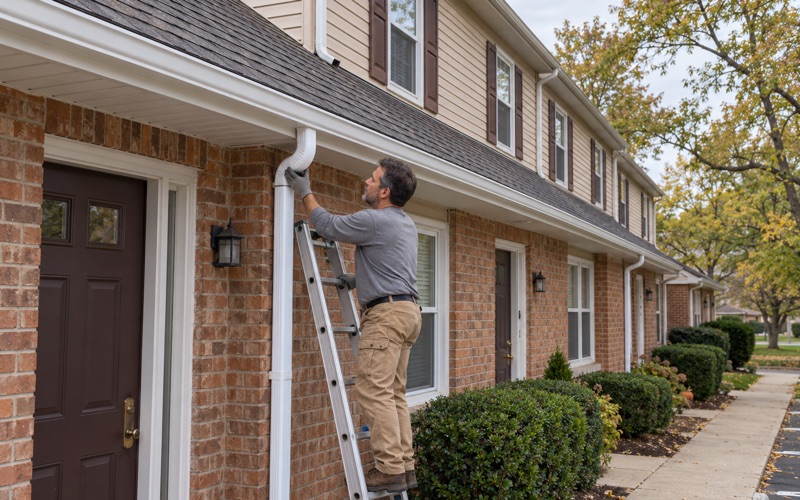
A gutter full of leaves sends water over the edge and against the fascia, the siding and the foundation. On a rental, nobody may have cleaned the gutters since the owner last lived in the house. Sagging sections, joints that drip, and downspouts emptying right beside the foundation are worth fixing before a new lease starts.
We size and pitch gutters and downspouts as part of the roof work rather than as an afterthought. When a roof is replaced, the drip edge, the gutter line and the outlets are planned together, so the water coming off the new roof has somewhere sensible to go.
Flashing at chimneys, walls and pipes
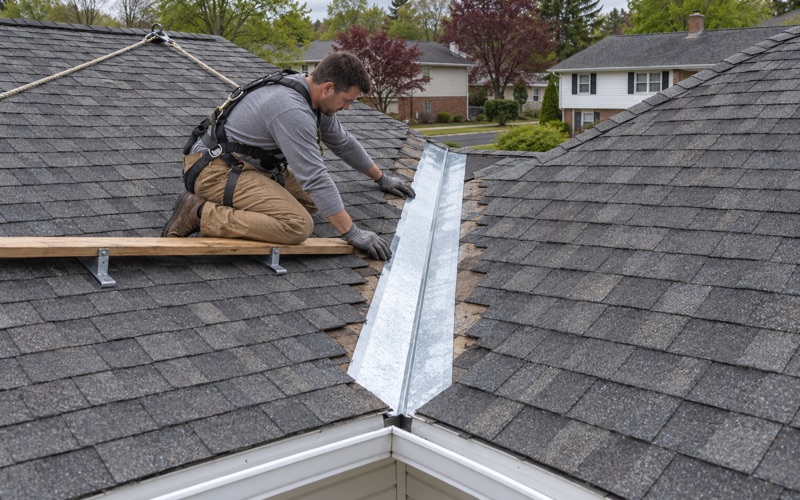
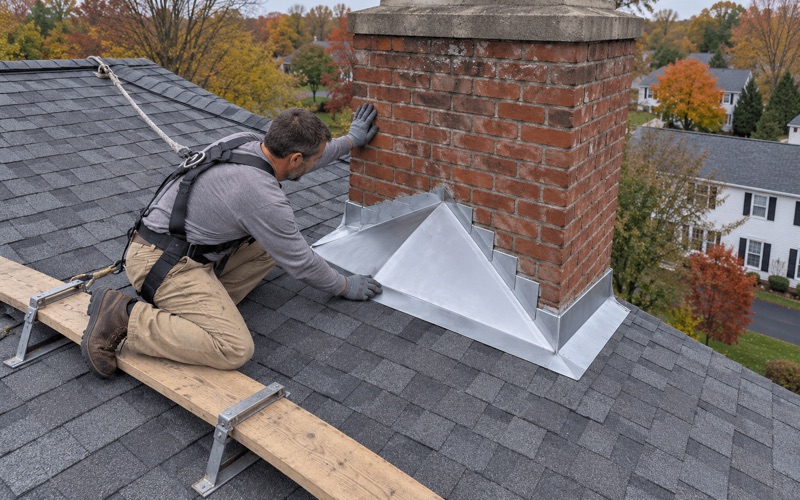
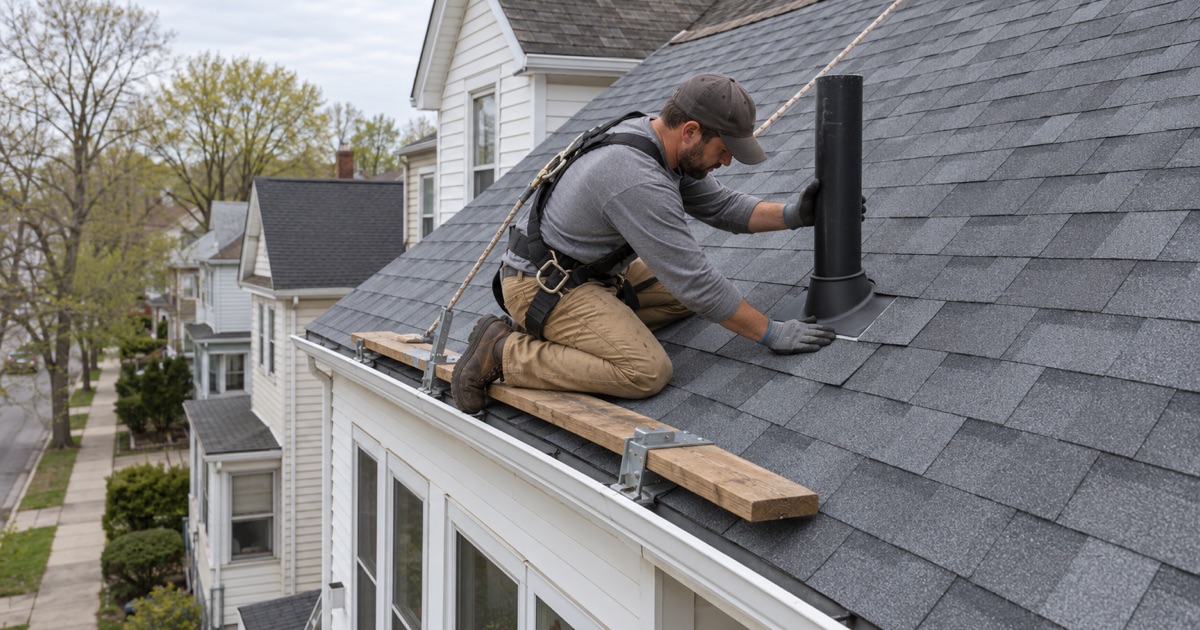
On many roofs, leaks start at the flashing rather than the shingles. Step flashing along a sidewall, counter flashing at a chimney, a pipe boot cracked by years of sun, or a missing kick-out where a roof edge meets siding can each let water in behind finished walls, where it shows up far from its source.
When we replace a roof, that flashing is replaced with it rather than bent back and reused under new shingles. Reused flashing is a common reason a new roof leaks in the same spot the old one did, and a repeat leak is the last thing an owner wants a new tenant reporting.
Houses from the 1990s building boom
Lumberton grew fastest in the 1990s, when the population rose from 6,705 at the 1990 census to 10,461 at the 2000 count. Census estimates place 2,341 of the township’s 5,036 housing units as built between 1990 and 2009, with 1,346 of them from the 1990s alone. A roof original to one of those houses would now be 17 to 36 years old.
That is the age range when an original asphalt roof typically comes up for its first full replacement. For an owner renting one of these houses out, a roof of that age deserves an honest look before a long lease begins, because a replacement midway through a tenancy means a crew working over an occupied home.
Planning Roof Work Between Tenants
Book the look before the lease ends
The best time to call us is a few weeks before a tenant moves out, not the day after. That leaves time to inspect, write a scope, order material and schedule the crew so the work is finished before the change-in-tenancy inspection. A roof job squeezed into the last two days of a vacancy is a roof job done under pressure.
If a tenant is still living there, we coordinate access through the owner or manager and keep the visit short. Attic access in a rented home often runs through a bedroom closet or a hallway hatch, so we let the occupant know in advance exactly what we need to reach and roughly how long it will take.
Repair or replace, answered first
Not every leaking rental needs a new roof. We tell the owner plainly whether the roof can be repaired, and only after that answer do we talk about replacement. A cracked pipe boot or a lifted run of shingles is a repair, and pricing it as anything bigger would serve neither the landlord nor the tenant waiting on it.
When replacement is the honest answer, we explain why, with the attic and roof findings in hand. The owner can then decide whether to replace now, during the vacancy, or make a sound repair and plan the replacement for a later turnover when the timing and budget suit.
A written scope you can compare
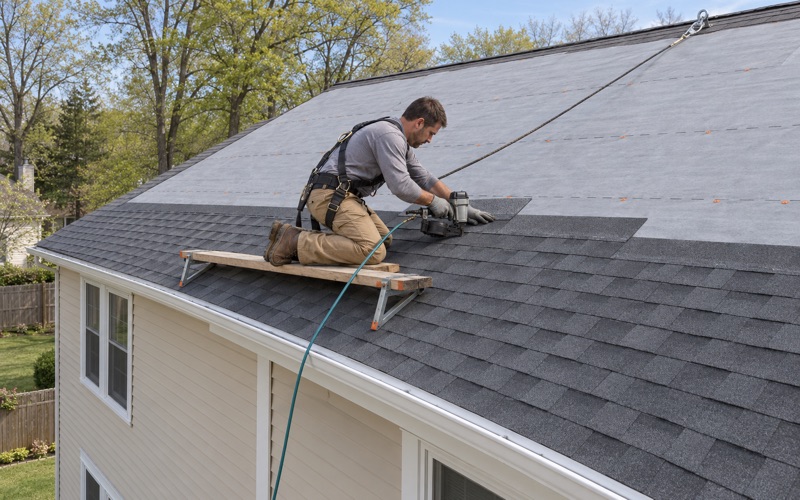
Our estimates list tear-off, decking, underlayment, flashing, ventilation and gutters as separate lines. An owner collecting two or three bids can line them up item by item and see where they differ. If damaged decking turns up once the old roof is off, we photograph it and show the owner before replacing it, at a per-sheet price already set in the contract.
At the end of each work day the driveway, yard and gutters are cleaned, including a magnet sweep for roofing nails. On a rental that is about to be shown or occupied, a stray nail in the driveway is exactly the kind of small problem that turns into a tenant complaint.
New Jersey rules for a New Jersey house
We work on both sides of the Delaware, and a Lumberton job is written to New Jersey rules, not Pennsylvania’s. Contracts, permits and sales tax are handled differently in the two states, and the rule for the house’s own municipality is checked before the job is priced, so the estimate an owner signs matches the town the house is in.
Where a New Jersey roof replacement qualifies as a capital improvement, the sales tax side is documented with Form ST-8. If storm damage is part of the story, we photograph it and write it up for the owner’s own insurance claim, and we will meet the adjuster on site when asked, without negotiating the claim.
- 20+ Years Experience
- Attic Checked on Every Leak
- Itemized Written Scopes