Bensalem Quality Roofing brings more than 20 years of experience to roofing in East Norriton, and much of what we plan here is shaped by one kind of owner: the landlord. When water gets through the roof of a rented home, the damage is rarely limited to a stained ceiling. It can sit between a vacant unit and the next signed lease, and that is the clock we work against.
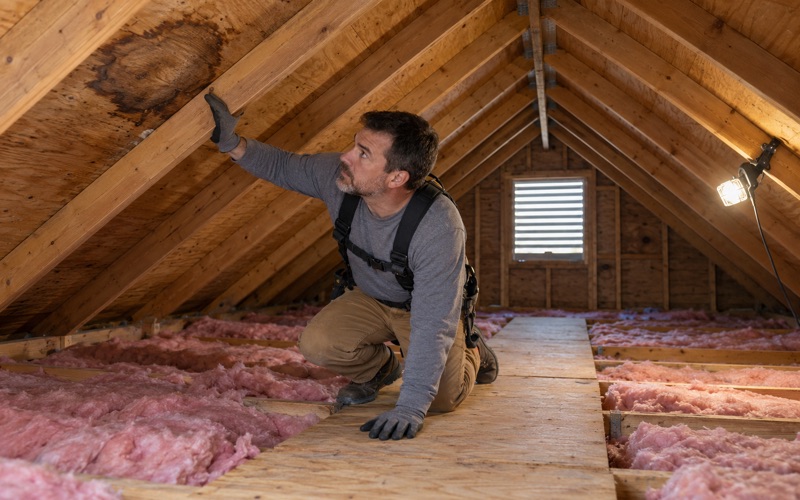
Every leak call starts the same way for us, with a look in the attic as well as on the shingles. Water often runs along a rafter or the underside of the sheathing before it shows on drywall, so we trace it to the spot where it actually enters. Only then do we price anything, because a guess at the source is how a repair fails twice.
We also tell you plainly whether the roof can be repaired before replacement comes up at all. Many rental roofs need new flashing, a few shingles or a pipe boot rather than a full tear-off. When replacement is the honest answer, our written scope lists tear-off, decking, underlayment, flashing, ventilation and gutters as separate lines you can hold against any other bid.
East Norriton’s Rental License and the Use-and-Occupancy Certificate
East Norriton Township licenses rental property on a yearly cycle run by its Code Enforcement Department, which works out of the township building on Stanbridge Street. The current terms appear in Section V of the Rental License Application, effective January 7, 2025. Three parts of that section bear directly on how a landlord should time roof work.
Registration by October 1
The application says every owner must register all rental properties on or before October 1 of each year, on forms the Code Enforcement Department provides. The annual fee is $75.00 per unit. An owner who has not paid within 30 days of October 1, or of the application date, is charged an extra $20 per unit as a penalty.
None of that is roofing work, but it sets the calendar many landlords run on. If a roof needs attention, we would rather hear about it in late summer than discover it the week a unit turns over. Planning a repair around the registration date keeps the paperwork and the property moving in the same direction.
The certificate before a unit is advertised
The same section states that certificates of use and occupancy are required for all rental properties before they are advertised or offered for rent. That puts the condition of the building ahead of the listing, not after it. For an owner with a vacancy, the certificate step is where an open roof problem becomes a scheduling problem.
We cannot tell you what Code Enforcement will note on a given day, and we will not pretend to. What we can do is make sure the roof itself is in sound, documented condition before the unit goes up for rent. Photographs of the finished work and a written scope give you a clear record of what was repaired and when.
Inspections afterward
After the first certificate, the application says ‘bi-annual inspections’ must be performed by Code Enforcement or when tenancy is obtained. The form does not define bi-annual, and we have not read the full rental ordinance or any inspection checklist, so we do not guess at the interval. Your township paperwork, or a call to 610-275-2800, is the place to confirm it.
The practical point holds either way. A new tenant moving in is one of the triggers the township names, so turnover is when the property as a whole comes back under review. Keeping the roof and its drainage in good repair between tenancies is simpler than rushing a fix while a lease waits on it.
Looking for roofing closer to Darby? See Roofing Services in Darby.
What the Property Maintenance Code Asks of a Roof, Flashing and Gutters
The township’s Property Maintenance page states that the East Norriton Township Supervisors have adopted the 2015 International Property Maintenance Code. That model code carries a section on roofs and drainage, numbered 304.7, and its wording is a useful plain-language standard for any rental owner. We have not checked whether the township amended it, so we treat the model text as a guide.
Sound, tight and free of defects that admit rain
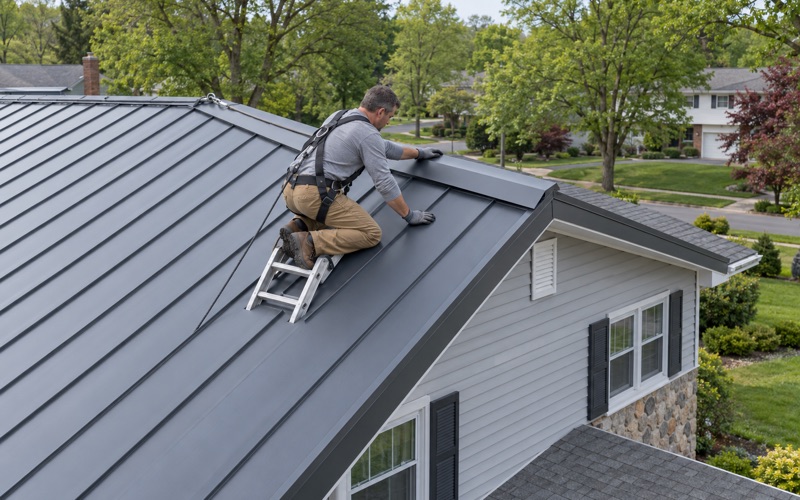
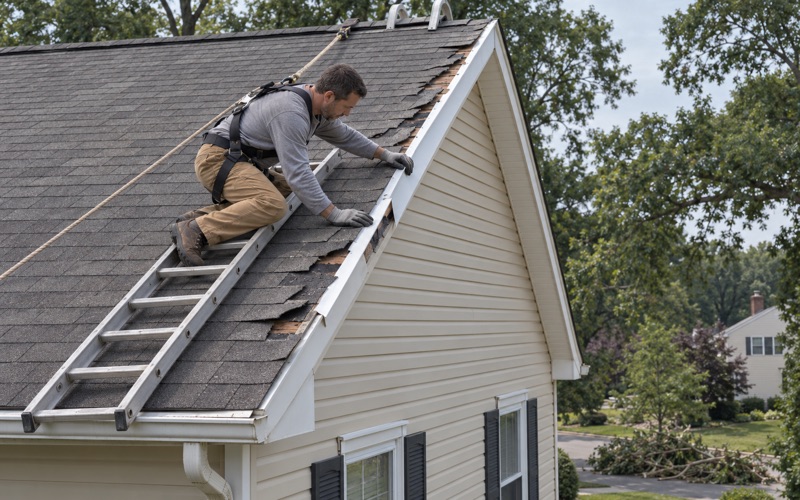
As quoted in municipal enforcement notices, section 304.7 says the roof and flashing shall be sound, tight and not have defects that admit rain. That covers more than missing shingles. Lifted tabs, a cracked pipe boot, exposed nail heads and flashing pulled away from a wall can all let water in long before anyone sees a drip.
This is where our attic check earns its place. A defect that admits rain is often invisible from the yard and obvious from below, where a dark ring on the sheathing or a damp insulation batt marks the entry point. Finding that spot is the difference between closing the defect and moving it a few feet down the slope.
Flashing that is replaced, not reused
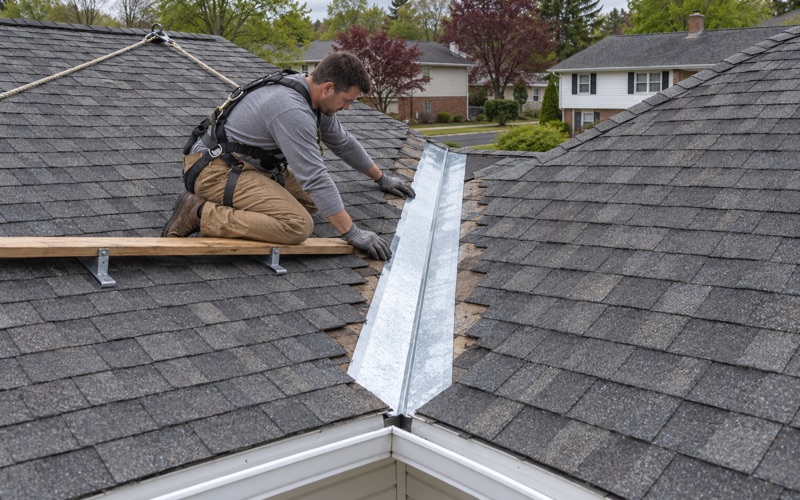
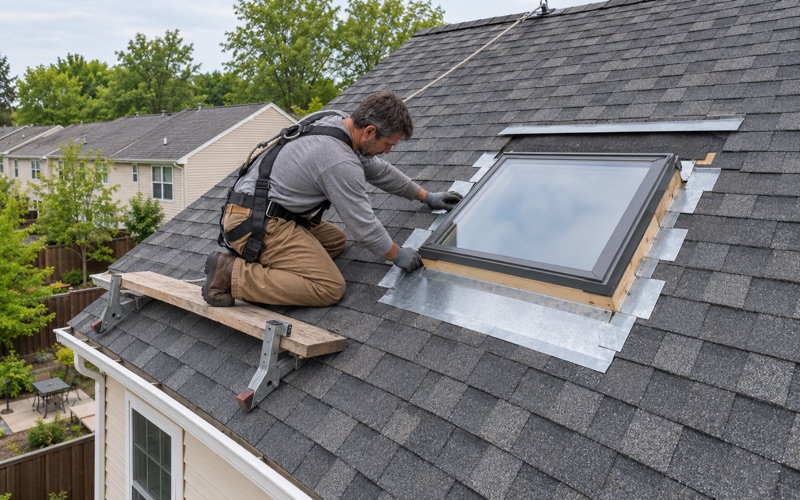
Flashing is named in the same sentence as the roof, and in our experience it is where most rental leaks begin. Step flashing along a sidewall, counter flashing set into a reglet, apron flashing at a porch roof and kick-out flashing at the eave all have to shed water as one system.
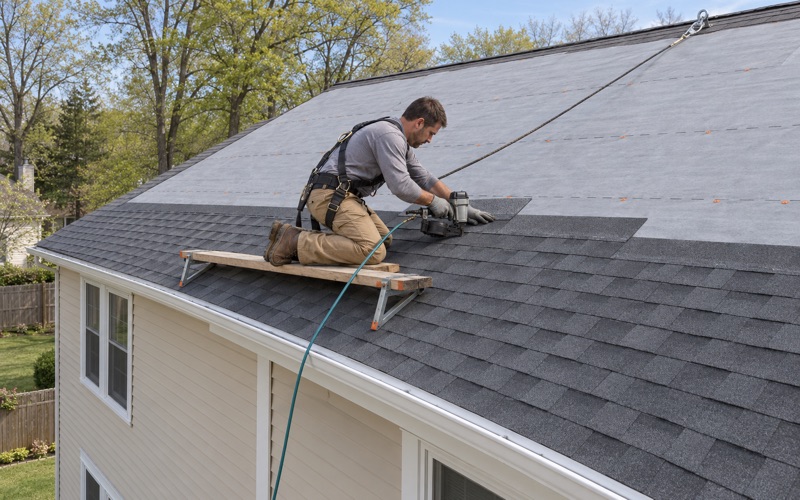
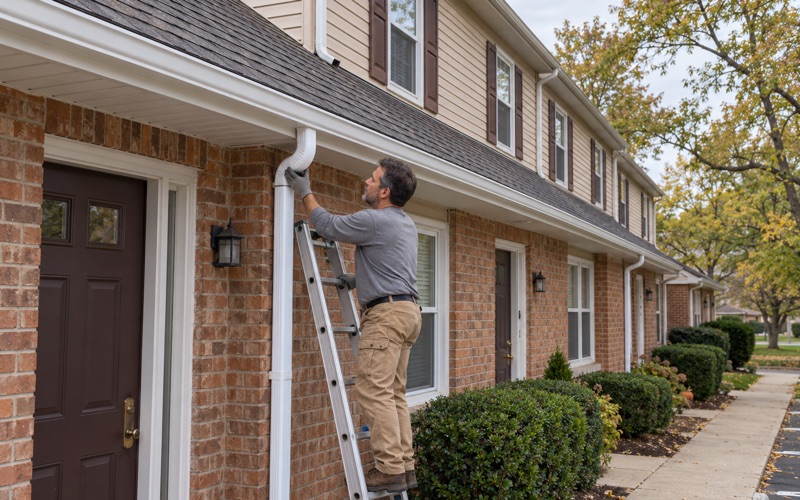
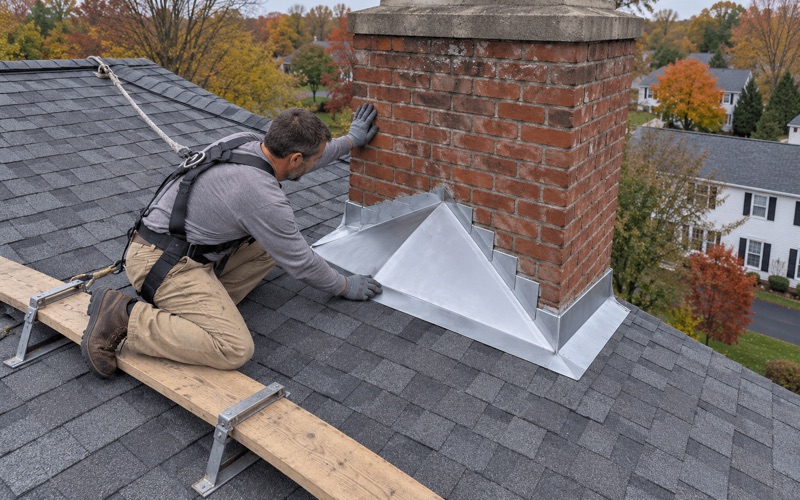
When we replace a roof, we replace the step, counter and chimney flashing with it rather than bending the old metal back under new shingles. Reused flashing is often already fatigued or nail-pierced, and it is the part most likely to fail first. Behind a wide chimney, a cricket keeps water from pooling against the masonry.
Gutters, downspouts and roof drainage
The code text also says roof drainage shall be adequate to prevent dampness or deterioration in the walls or interior, and that roof drains, gutters and downspouts shall be maintained in good repair and free from obstructions. It adds that roof water shall not be discharged in a manner that creates a public nuisance. For a landlord, the gutters are part of the roof, not a separate chore.
We size and pitch gutters and downspouts together with the roof rather than rehanging whatever was there. A seamless aluminum run with enough downspouts, and drip edge tucked behind the gutter at the eave, moves water off the fascia and away from the foundation. A downspout dumping onto a shared walk or a neighbor’s yard is worth correcting while the crew is already on site.
Fixing a Rental Roof Between Tenants
The gap between one lease and the next is often the best window for roof work. Nobody is working from home under the noise, furniture is out of the way of any interior repair, and the unit can be shown with the roof already settled. We plan that window with the owner from the first visit.
Repair first, when repair is enough
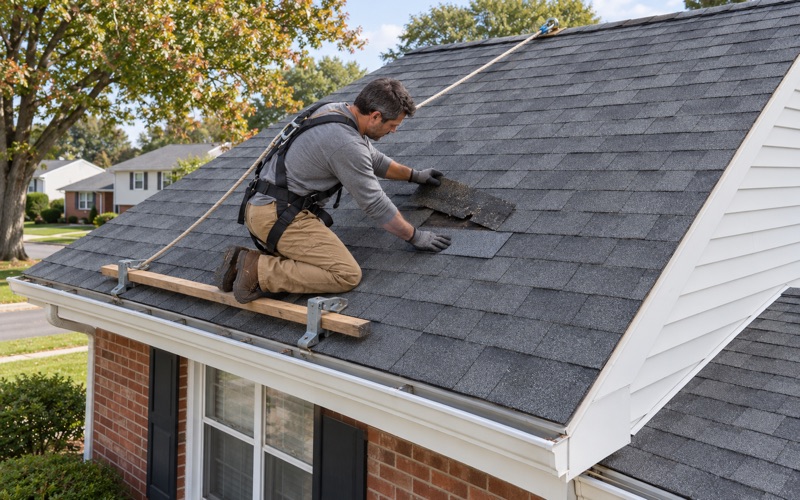
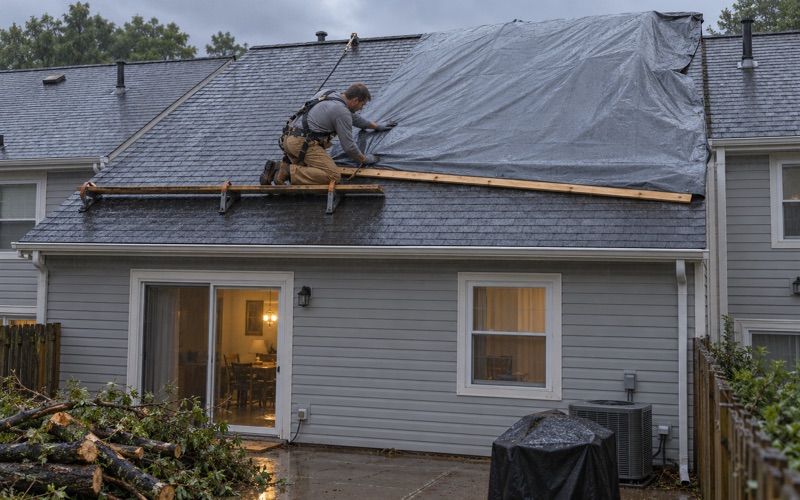
Most turnover calls do not need a new roof. A cracked boot, a run of wind-lifted shingles or a loose section of flashing can often be fixed in a day and documented with photos. We tell you that up front, before replacement is discussed, so the money goes where the leak actually is and the unit is not held vacant for work it never needed.
When the roof is past repair, we say so just as directly and explain why. Granule loss down to the mat, widespread curling, soft decking underfoot and repeated leaks at different points all suggest the covering has reached the end of its life. Patching a roof in that condition tends to bring the same call back after the next storm.
Decking surprises, priced in advance
Rental roofs that leaked for a while before anyone reported them often hide soft or delaminated sheathing. Our contract sets a per-sheet price for replacement decking before tear-off begins, so a surprise under the old shingles does not become a surprise on the invoice. Any damaged board we find is photographed and shown to you before it is replaced.
For an owner managing from a distance, those photos matter as much as the repair. They show exactly which sheets were bad, where they were and what replaced them. That record sits alongside your rental file and answers questions from a future buyer, an insurer or the next contractor without anyone having to climb up and look.
Contracts, permits and a clean site
Every Pennsylvania contract we write follows the state’s home improvement law, including the three-business-day cancellation notice and a deposit kept within the legal limit. Because each township sets its own re-roof permit rule, we check East Norriton’s own requirement for the job before pricing it rather than assuming another municipality’s practice applies.
At the end of each work day the driveway, yard and gutters are cleaned, and a magnet sweep picks up loose roofing nails. On a rental that matters twice over, since a tenant or a prospective one may be walking the property the next morning. A clean site keeps showings on schedule and keeps nails out of tires.
Rented Houses, Townhouses and Apartment Buildings in East Norriton
East Norriton’s rental stock is more varied than many owners expect. Figures from the 2024 American Community Survey count 1,863 rented homes among 6,111 occupied ones, about 30.5% of the total. Those rentals range from detached houses to units in large apartment buildings, and each type asks something different of a roof.
Rented detached houses
The survey counts 345 rented detached houses, a small share of the township’s housing but a large share of the roofing questions landlords bring us. Many East Norriton homes date from the middle of the last century: 1,270 units were built during the 1950s and 1,118 during the 1960s. A house of that age may be carrying its second or third roof.
On a rented house, we check how many layers are already on the deck before recommending an overlay or a tear-off, because the residential code limits how many coverings a roof can carry. We also look at attic ventilation, since a ridge vent without enough soffit intake bakes shingles from below. Fixing airflow during a reroof costs less than chasing early wear later.
Townhouses and twins
The survey also counts 66 rented single-family attached homes, the townhouses and twins where one roof meets another at a shared wall. Work on one side affects the other, so we plan the tie-in, the flashing at the party wall and the drainage line with the neighbor’s roof in mind. A clean transition there keeps a leak from being blamed on the wrong unit.
Where the neighboring owner is planning work too, coordinating the two jobs can save both of them money and a mismatched seam. Where they are not, we leave their side as we found it and document the joint. For a landlord, that documentation helps if a tenant on either side later reports water near the shared wall.
Apartment buildings and low-slope roofs
Larger buildings hold much of the township’s rental housing: the survey places 759 rented units in buildings of 50 or more, and another 357 rented units sit in buildings of 10 to 19 units. The Bentwood Executive Campus on Germantown Pike, for example, includes a 261-unit multifamily complex. Buildings of that scale often sit under low-slope roofs rather than shingles.
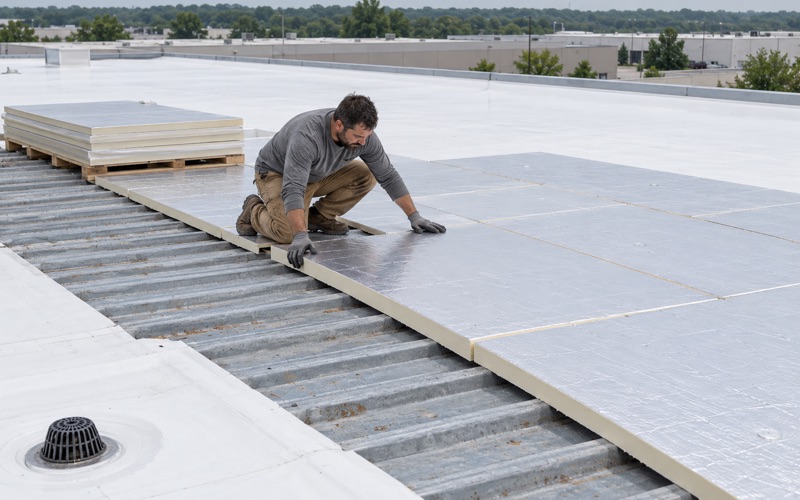
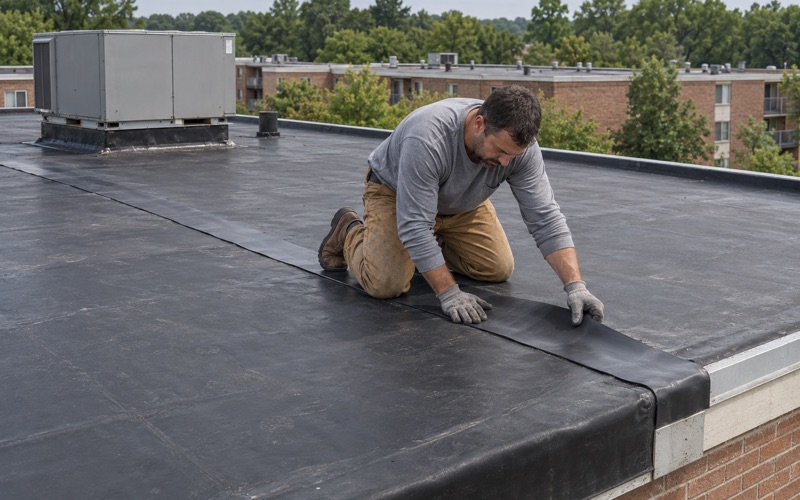
On those roofs we work with EPDM rubber, TPO and PVC single-ply membranes and modified bitumen, each with its own seam and edge details. Drains and scuppers matter as much as the membrane, because ponding water is the kind of poor drainage the property maintenance code warns against. We quote that work as its own kind of job, not as a shingle roof with a different material.
- 20+ Years Experience
- Attic Checked on Every Leak
- Itemized Written Scopes