Bensalem Quality Roofing has spent more than 20 years on roofing in Doylestown Township and across Bucks County, and the first thing we settle on any job here is which rulebook applies to the building. The township writes re-roofing into its paperwork as commercial work, which shapes how an office, clinic or shop roof is priced and leaves a homeowner with one question worth asking early.
That habit comes from working a service area where every township and borough sets its own re-roof rule. We read the rule for the property’s own municipality before we price anything, then build the estimate around it, so a permit fee or a set of sealed drawings never turns up halfway through the job as a surprise.
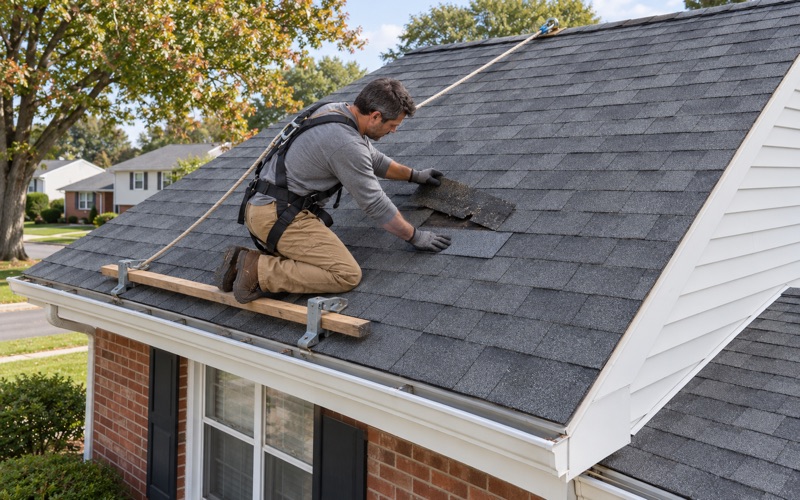
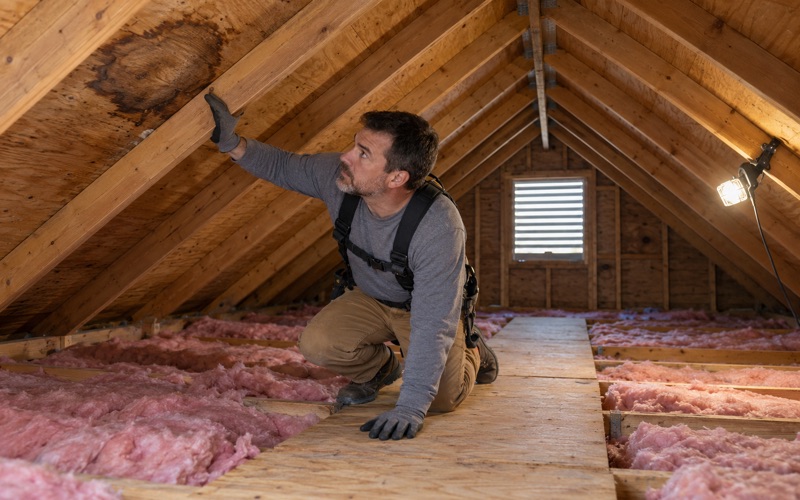
On the roof itself, the method stays the same whatever the building. Every leak call gets a look from the attic side as well as the shingle side, so we find where the water actually enters. You hear a plain answer on whether a repair will hold before anyone mentions a new roof.
Re-Roofing on Doylestown Township’s Commercial Permit List
Ten residential boxes, none for a roof
The township Building Permit Application, revised January 13, 2026, splits its checkboxes into two groups. The residential side carries ten permit types: an accessory building over 1,000 square feet, demolition or tank removal, a swimming pool, a hot tub, a new dwelling, exterior alterations or additions, interior alterations, a HUD manufactured home, a deck 30 inches or more above grade, and construction within a floodplain.
Re-Roofing appears only on the commercial side, next to additions, exterior alterations, new construction, alarm and FM 200 systems, interior alterations, tank removal and demolition. That placement is why this page reads differently from our other township pages. Here the form itself tells you re-roofing is something the township has written down for non-residential buildings.
Which roofs land on the commercial side
Doylestown Township sits beside the county seat and hosts many county offices and the county correctional facility. The Doylestown Hospital address on West State Street geocodes to the township rather than the borough, and most of Delaware Valley University lies inside township lines as well.
Offices, medical buildings, campus halls, stores and churches are the roofs this commercial checkbox speaks to. For the owner or property manager of one of them, a re-roof starts as permit work, and we schedule it that way from the first site visit rather than treating the application as paperwork to finish later.
Township, not borough
Doylestown Borough, the county seat, is a separate municipality with its own roof permit rule, and a Doylestown mailing address does not tell you which side of the line a building sits on. We confirm the municipality before quoting, because the township’s forms and fees apply only inside its 15.6 square miles.
Those square miles take in villages such as Fountainville, Furlong, Edison, Dyerstown, Cross Keys and Castle Valley. A building in any of them answers to the township office, not the borough hall, and we write the estimate to match.
Looking for roofing closer to Northampton Township? See Roofing Services in Northampton Township.
What the 2026 Fee Schedule Charges for a Commercial Re-Roof
1.5 percent of construction cost, with a $350 floor
The township’s 2026 fee schedule, adopted under Resolution #2806 and revised April 14, 2026, has one line that names roofing. It covers non-residential alterations including re-roofing, sidewalk and step replacements, and site and exterior accessibility upgrades, and it is priced at 1.5% of construction cost with a $350 minimum fee, plus PA UCC fees.
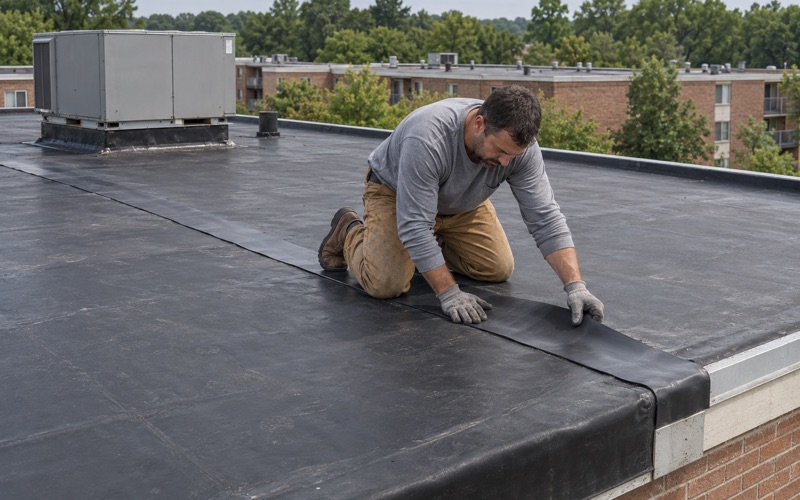
Because the fee is a share of the job, the permit cost moves with the size of the roof. A small flat section over a storefront entry may only reach the minimum, while a full tear-off on a larger building pays the percentage. We price the roof first, then show the permit line calculated from that number, so the owner reads both on the same page.
How the residential line differs
The same schedule prices residential alterations, additions, decks and accessory structures over 1,000 square feet on a separate line: a $200 minimum up to $1,000, then $15 per thousand thereafter, plus PA UCC fees. That line carries no re-roofing wording, and no other residential line in the schedule does either.
We point this out so a homeowner reading the schedule understands why the roofing line they might expect is missing. We are not suggesting a house fee. The schedule is silent on houses, and silence in a fee table is not the same thing as an answer.
Five years to finish the work
The schedule also notes that construction permits are valid for 5 years per PA UCC 403.43. That window is worth knowing when a large commercial roof is split across two budget years, with the worst sections done first and the rest planned for the following season.
Sealed Drawings, Insurance Certificates and the Final Inspection
Drawings signed and sealed by a design professional
The application states that all commercial construction documents must show the work will comply with the PA UCC and must be signed and sealed by a Pennsylvania architect or engineer. For a commercial re-roof, that puts a design professional on the project before the permit is filed, and we plan the calendar with that step included.
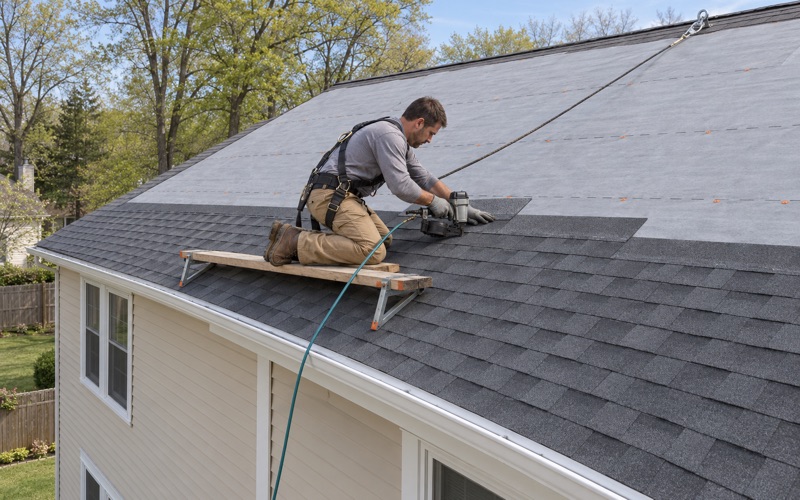
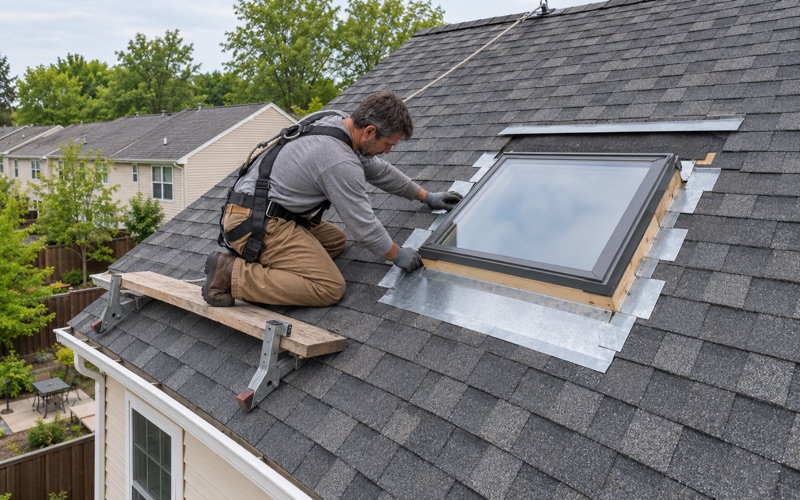
We work from those sealed documents rather than around them. Our written scope follows the drawings, with tear-off, decking, underlayment, flashing, ventilation and gutters each on its own line. An owner can match the estimate to the design, then hold a second bid against exactly the same items.
Insurance the township asks to see
The township asks contractors to supply workers’ compensation coverage and $1,000,000 per-occurrence general liability insurance naming the township as an additional insured. A certificate of insurance showing both belongs in the permit file, and we send it with the application rather than waiting for the office to ask.
The form also has a line for a state contractor number. Pennsylvania does not issue roofing licenses at the state level. Home improvement contractors register with the Attorney General under the Home Improvement Consumer Protection Act, and that registration is a different thing from a license, so we never describe it as one.
Holding the last payment for the inspector
The application carries a plain recommendation: don’t make final payment to the contractor until the final inspection is passed. We agree with it, and our payment schedule holds the last installment until the inspector has signed off on the roof.
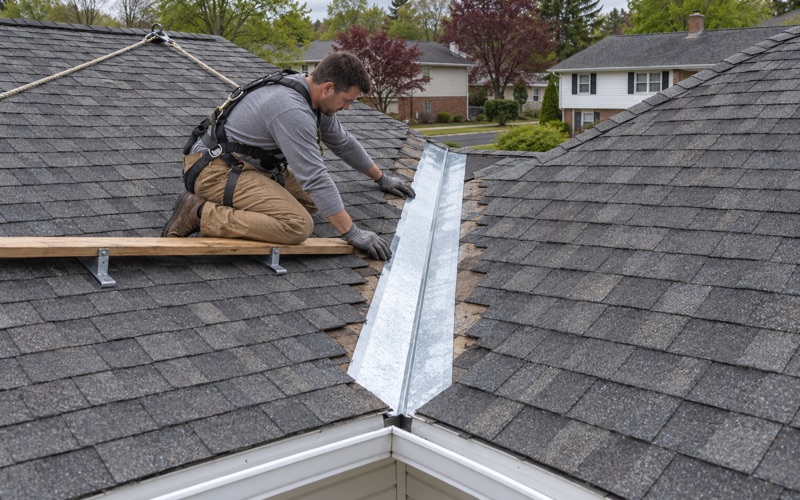
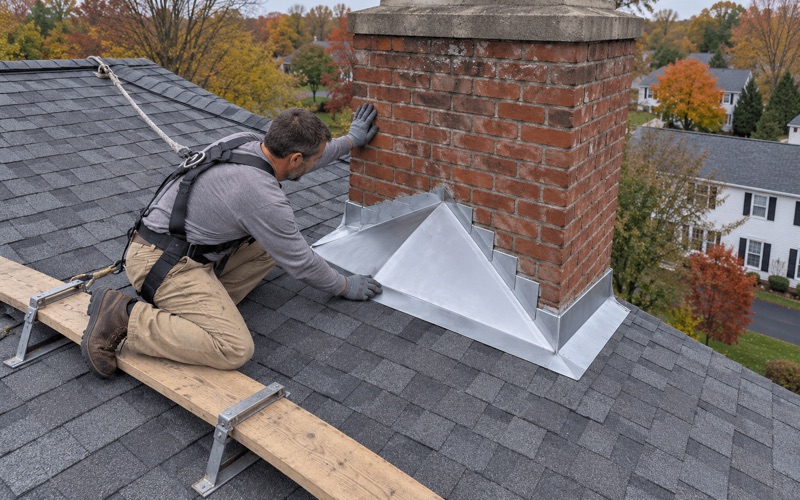
Nothing new should appear on that final invoice. Damaged decking found once the old roof is off is photographed and shown to the owner before it is replaced, at a per-sheet price already set in the contract. Step and counter flashing goes on new with the roof instead of being reused under fresh material.
Each work day ends with the lot, walks and gutters cleaned and a magnet sweep for roofing nails. On a hospital campus, an office park or a busy storefront, that daily cleanup matters as much to the owner as the roof itself.
A House Re-Roof in Doylestown Township: Ask First
What the township documents leave open
Neither the application nor the fee schedule says what a house re-roof needs. The Code and Zoning page says residential construction projects use the International Residential Code 2021, and its permit page lists 25 application forms and 34 guidelines covering decks, fences, sheds, patios, pools and generators, with no roofing guideline or re-roofing form among them.
At the state level, section 403.1(b)(9) of the UCC regulations leaves repairs to residential buildings outside the UCC, except as required by local ordinances. Whether the township treats a full re-roof that way is exactly what its documents do not say, so we do not guess on the township’s behalf.
A call to 425 Wells Road before a start date
Doylestown Township Code and Zoning is at 425 Wells Road and answers at 215-348-9915. Before we set a start date on a house, we ask the office directly how it treats the job in front of us, and we pass its answer to the homeowner in writing.
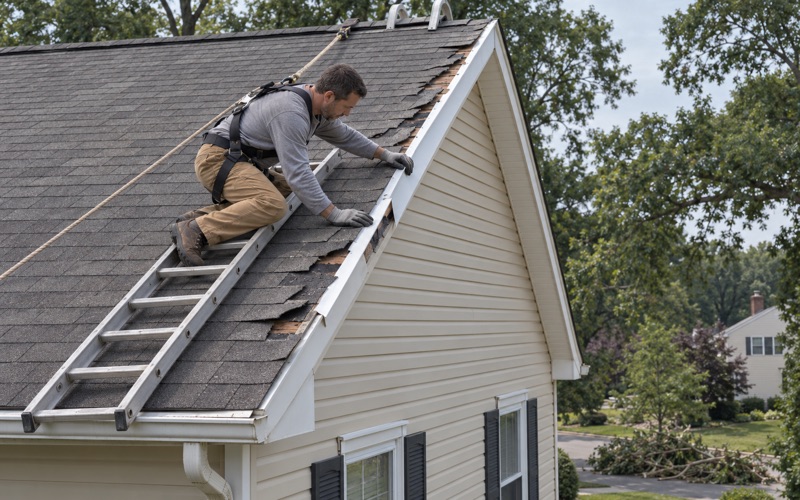
If the answer is a permit, the fee and the timing go into the contract from the first estimate. Either way, the scope is written to the same standard, with ice and water barrier at the eaves, drip edge at eaves and rakes, and a full tear-off wherever two layers are already on the house.
Contracts written to Pennsylvania’s home improvement law
A house job is a home improvement contract under Pennsylvania law, so ours carries the three-business-day cancellation notice the law requires. Deposits stay within the legal limit set for home improvement contracts. Both terms are printed in the contract itself, not left to a conversation at the door.
Exterior work in the Historic District
The township has a Historical Architectural Review Board that advises the Board of Supervisors on building permit applications for exterior work visible from a public street in the Historic District. Its page does not name the district or mention roofing, so for a house that may sit in it, the same call to the code office covers whether that review applies.
Doubled fees when work starts without a permit
The fee schedule is blunt on this point: if construction starts without first obtaining the required zoning or construction permits, the applicable fees are increased by 100%. On a commercial roof priced at 1.5 percent of construction cost, that doubles a permit bill that already grows with the size of the job.
That penalty is the practical reason we ask before we mobilize. A short phone call costs nothing and takes a few minutes. A doubled fee discovered after the crew is already on the roof is money an owner never needed to spend, and it is the one cost on a roofing job that is entirely avoidable.
- 20+ Years Experience
- Attic Checked on Every Leak
- Itemized Written Scopes