Bensalem Quality Roofing brings more than 20 years of work to roofing in Darby, and on houses of this age the shingles are seldom the only thing a job disturbs. New drip edge, new gutters and a replaced edge board all meet old painted wood where the roof stops. We plan that edge as carefully as the field of the roof, because it is where the federal lead-paint rules come into a roofing contract.
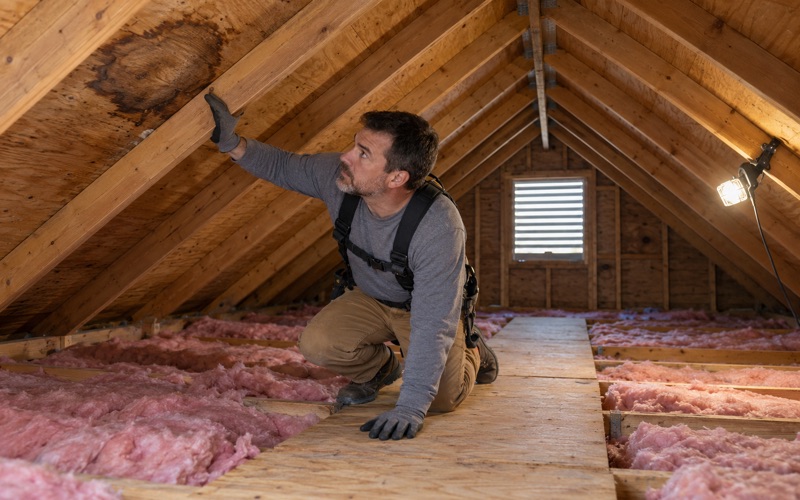
Every leak call starts in the attic as well as on the roof, so we can trace water to the place it actually enters before anyone talks about money. You get a plain answer on whether the roof can be repaired before replacement comes up at all. Each township and borough sets its own re-roof permit rule, so we confirm the one for your address before the price is written.
What follows is the part of a Darby roof job most owners never hear about until a crew is on the ladder. It covers how old the housing stock is, how Delaware County’s lead program treats the borough, which painted surfaces a roofer actually opens, and how much disturbed paint brings a job under EPA’s Renovation, Repair and Painting rule.
How Old Darby’s Houses Are, and Why 1978 Matters
Almost Nothing Here Is New
Darby is a borough of 0.84 square miles along Darby Creek, about 5 miles southwest of Center City Philadelphia, incorporated May 3, 1853 and home to 10,715 people at the 2020 census. Its houses reflect that long history. Census estimates count 4,545 housing units, and 4,204 of them, or 92.5 percent, were built in 1979 or earlier.
The older bands are just as telling. In all, 3,637 units (80.0 percent) went up before 1960, and 1,339 (29.5 percent) date to 1939 or earlier. The estimates show no home at all built since 2000. For a roofer, that means nearly every Darby job is on a house old enough that its original trim paint predates or sits close to the federal line.
The Federal Line at 1978
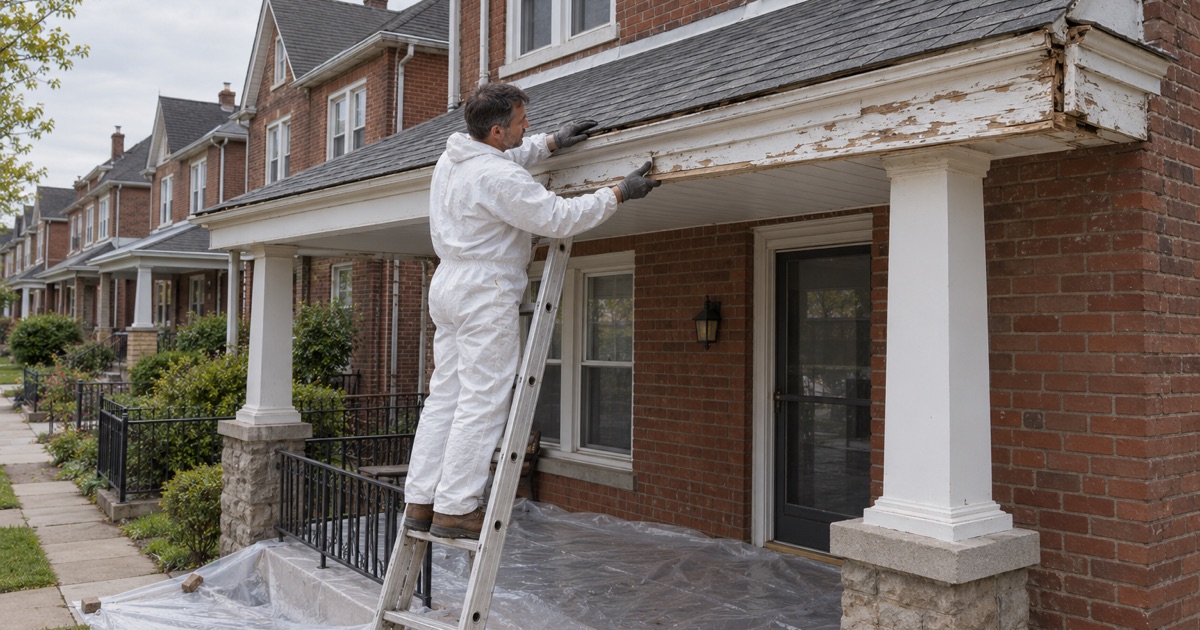
EPA’s Renovation, Repair and Painting rule applies to renovation work in houses and apartments built before 1978. The rule is not about roofing materials. It is about painted surfaces that get cut, scraped, pried off or sanded while other work is underway, and the dust and chips that work leaves on the ground, the porch and the windowsills.
The Census bands stop at 1979, so the exact number of pre-1978 homes in Darby is not published. What the numbers do show is that a house built after the line is the rare exception here. When we look at a Darby roof, we assume the RRP question applies until the house’s build year says otherwise, and we write the scope with that in mind.
Age Flags the Rule, a Test Answers the Question
A house’s age brings work under the rule, but age alone does not prove lead is in the paint. When a Darby house was built tells us which rules apply, not what is actually in the paint at its roof edge. Some trim has been replaced over the decades, and some was repainted with newer coatings over whatever lay beneath.
That distinction matters to an owner deciding what to do. The rule’s work practices follow from the year and the amount of paint disturbed, not from a confirmed result. A lead test is what answers whether the paint on your fascia actually contains lead, and on a house with young children living in it, that answer can open a different path entirely.
Looking for roofing closer to Upper Moreland? See Upper Moreland Roofing.
Delaware County’s Lead Program and Darby’s Place in It
Darby Borough Sits in Target Area B
Delaware County runs a Lead Hazard Reduction Program through the county Health Department and its Office of Housing and Community Development, funded by a grant from HUD’s Office of Lead Hazard Control and Healthy Homes. The county planning department’s map groups priority municipalities into target areas, and Darby Borough is named in Target Area B.
Applications are taken first come, first served, with priority for households whose children have tested positive for elevated blood lead and for homes inside one of the identified target areas. Living in Darby therefore places a qualifying household in a priority group. That is a meaningful advantage on a house where the roof-edge trim is old, peeling and due for work anyway.
Who Qualifies
The program’s guidebook sets the basic tests. The home must have been built prior to 1978, and a child under 6 must live in it, spend set time there each week, or be expected. Household income must fall under HUD limits, which for a family of four is $98,150 under the figures effective June 1, 2025.
Landlords can apply too. A Darby rental needs a rental license or a certificate of occupancy to qualify, and the unit must stay available to low-income families with young children. With 2,000 of the borough’s 3,992 occupied homes rented, including 1,206 attached houses, the landlord route is relevant to a large share of the housing.
What the Program Pays For, and What It Does Not
A certified inspector and risk assessor tests interior and exterior surfaces, and the work is limited to what that assessment finds. The guidebook says remediation can include replacing trim and moldings and scraping and sealing loose or deteriorated paint. The county’s own pre-qualified lead contractors bid that work, and they must pull any required municipal permits.
The program is not a roof program. It pays for lead remediation only, and it does not replace or repair roofs. We are not one of its contractors. Where a household qualifies, though, sequencing matters: getting the trim assessed and treated under the county program, then scheduling the roof around that work, keeps two crews from disturbing the same painted boards twice.
The Painted Wood at a Darby Roof Edge
Fascia Behind the Drip Edge and Gutters
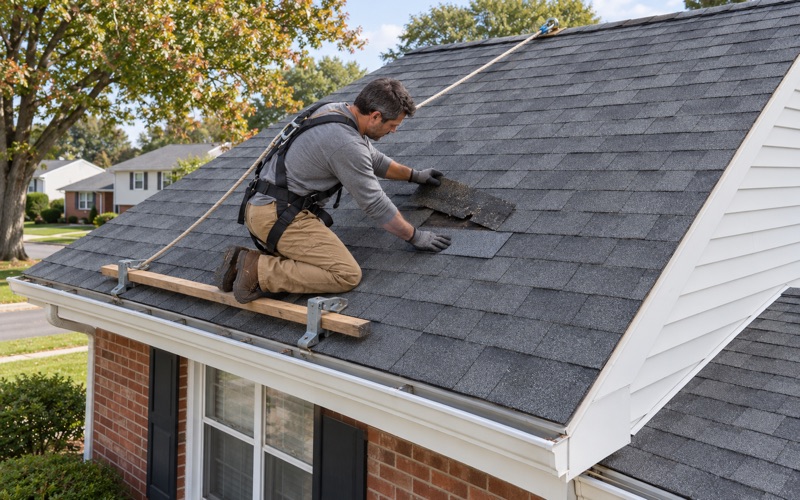
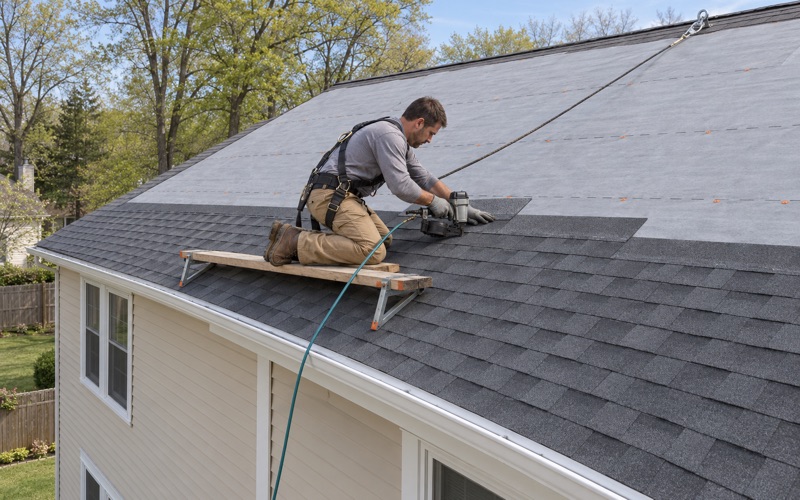
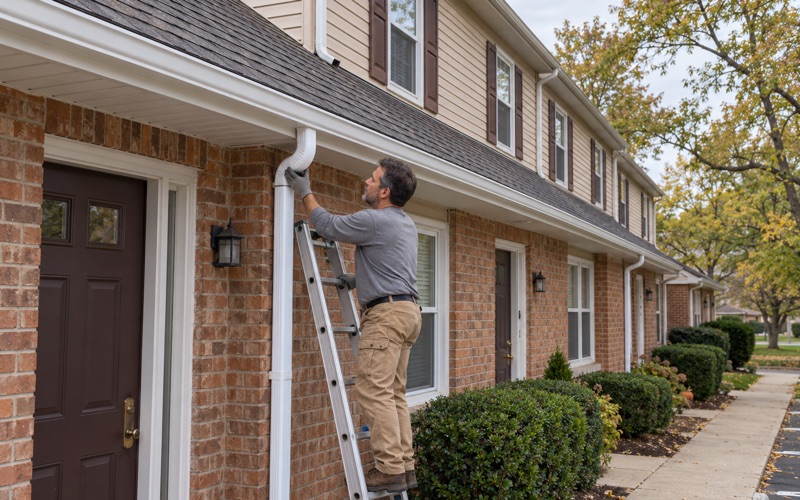
The fascia is the board nailed across the rafter tails at the eave, and it carries the gutter and the drip edge. On an older Darby house it is often painted wood. Replacing gutters means pulling hangers out of it, and new drip edge means lifting shingles and nailing metal over its top edge, so the paint gets disturbed either way.
Rot often starts where gutters have overflowed for years. When the old roof comes off and soft fascia or decking shows up, we photograph it and show you before replacing anything, and decking is priced per sheet in the contract. We size and pitch the new gutters and downspouts with the roof, so the board behind them is not soaked again.
Soffit and Rake Boards
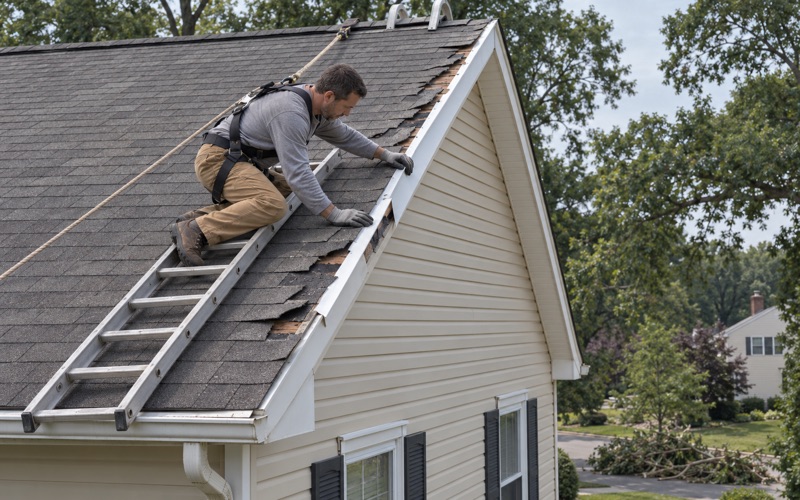
The soffit is the underside of the overhang, and on many older houses it is painted wood or beadboard rather than vented vinyl. Adding intake vents for a ridge vent means cutting into it. The rake boards run up the gable ends, and new drip edge along the rakes sits right against their painted faces.
These surfaces add up faster than owners expect. A rake board on each side of a modest gable, a run of soffit where vents go in, and a few feet of fascia with rot can together pass the size where the rule’s work practices begin. We list each painted surface the job touches as its own line in the written scope.
Cornice and Porch-Roof Trim
Many older houses carry a cornice at the front eave, built up from several molded boards, and a separate porch roof with its own painted fascia and trim. These pieces are often the most decorated wood on the house. They are also the most likely to have been repainted many times over the decades.
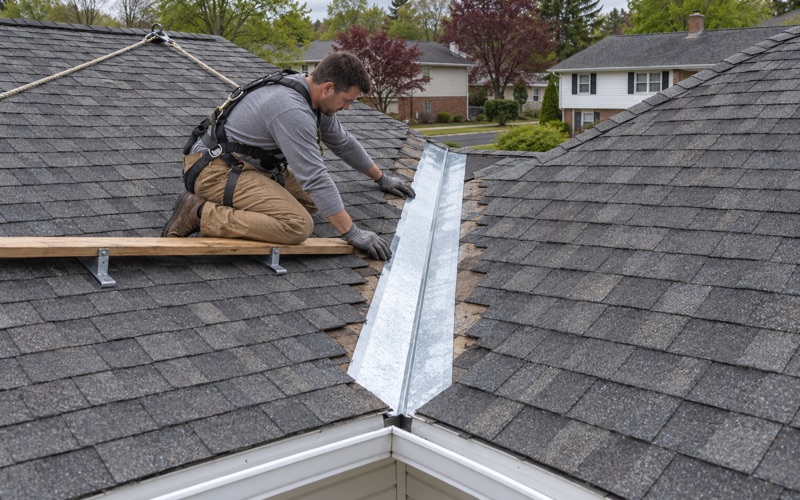
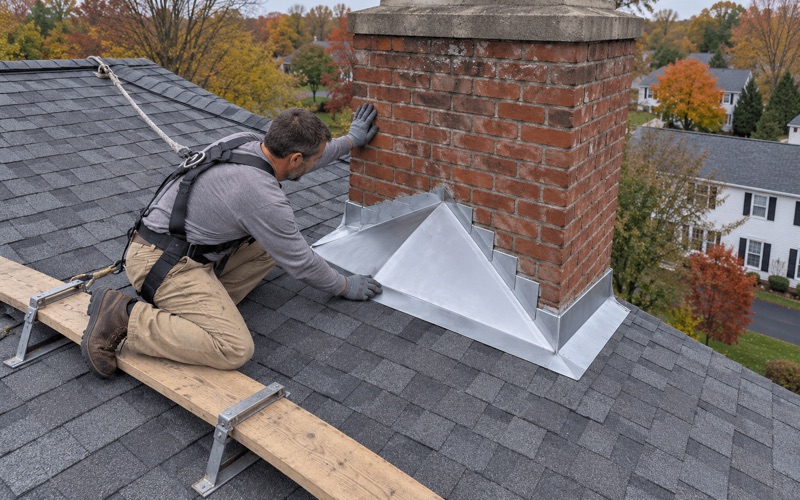
A porch roof is a frequent leak point where it meets the front wall, and fixing it means flashing that ties into the painted trim. We replace step, counter and chimney flashing with the roof rather than reusing it. When that new flashing cuts into a painted cornice or porch board, the area disturbed counts toward the rule’s limit like any other painted surface.
When a Darby Roof Job Crosses EPA’s 20 Square Foot Line
Measuring the Painted Area Before the Price
The RRP rule exempts minor repair and maintenance that disturbs 20 square feet or less of paint on the exterior of a home, and six square feet or less per room inside. Beyond that amount, the work is covered: the firm must hold EPA’s firm certification under the rule and follow its work practices. Window replacement and demolition of painted surfaces are always covered.
We estimate how much painted trim a job will open before the price is set, not halfway through tear-off. A shingle repair that never touches the edge may never reach the line. A full replacement with new gutters, drip edge on every eave and rake, and soffit vents usually will, and the written scope says which applies.
Rentals and Young Children
The rule applies whether the house is owned or rented, and in Darby half of the occupied homes are rentals. For a landlord with a pre-1978 unit, the question of who lives there matters. A tenant household with a child under 6 is the kind the county program is built for, and the landlord may be able to apply.
The rule also carries pre-renovation education requirements alongside its training and firm certification requirements. On a rented house we plan daily cleanup carefully, sweeping the yard, driveway and gutters at the end of each work day, including a magnet pass for roofing nails, so a child in the yard is not walking through the job site.
County Testing Before Trim Is Replaced
If an eligible household is planning roof-edge work, the order of operations is worth thinking through. A county risk assessment tests the exterior surfaces and decides whether trim and moldings should be replaced or paint sealed under the program. That answer then tells everyone what the roof crew is actually working against.
Owners who do not qualify still have choices. Some have the trim tested privately before a reroof, and some simply plan the job as covered work from the start. Either way, we put the painted-trim scope, the gutter work and the roof itself on separate lines, so two estimates for a Darby house can be compared item by item rather than as one lump figure.
- 20+ Years Experience
- Attic Checked on Every Leak
- Itemized Written Scopes