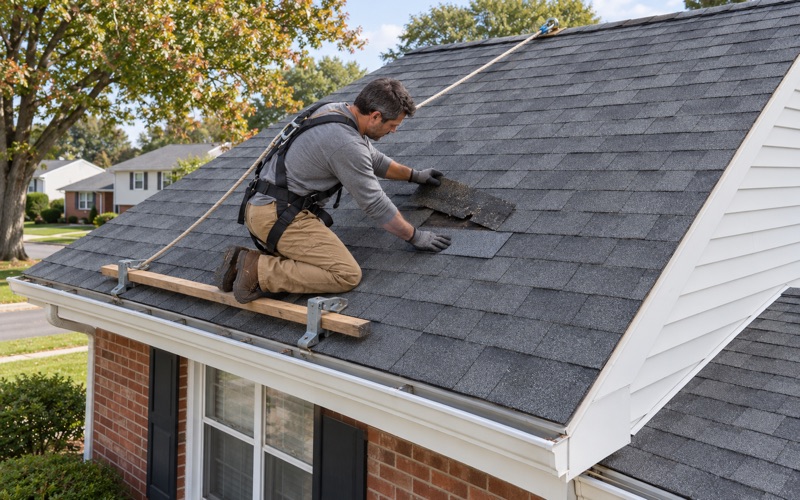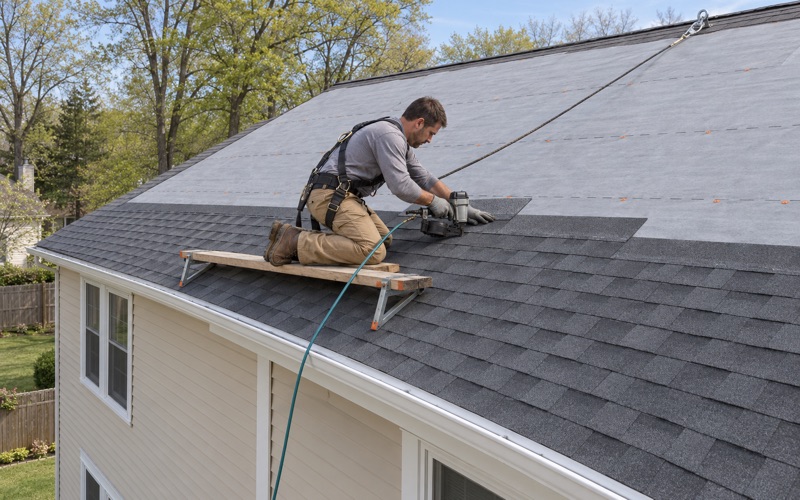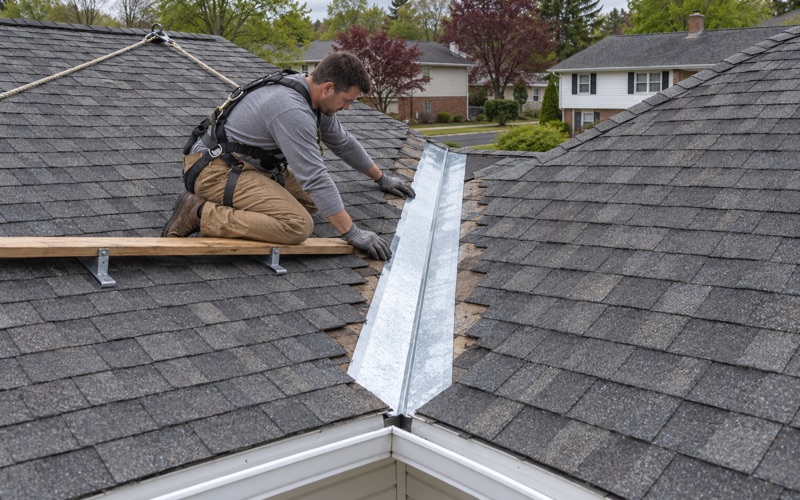
Bensalem Quality Roofing brings more than 20 years of work to roofing in Collingswood, and on this side of the Delaware that work is written to New Jersey’s rules rather than Pennsylvania’s. Many of the calls we answer here start with something that came down on a roof, not something that wore out under it. That changes the order of the job, and this page walks through it.
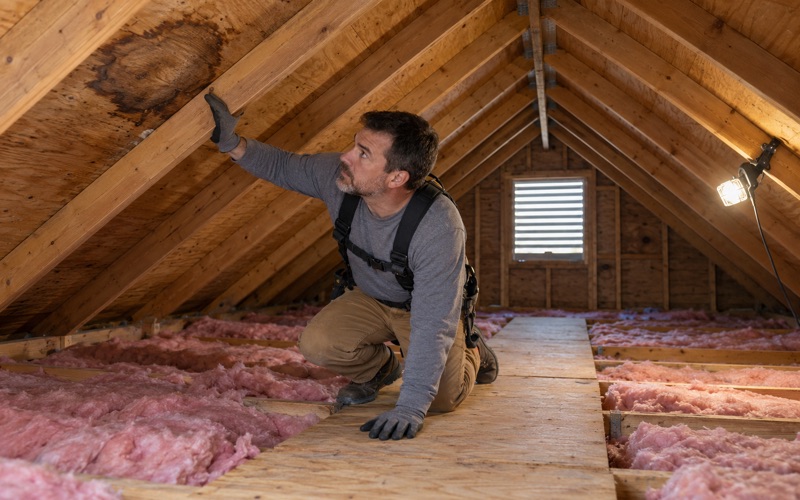
When a limb lands on a house, the first question is how far the damage goes below the shingles. We look in the attic as well as on the roof before anything is priced, because a branch that cracks a rafter or splits a sheet of decking leaves marks inside long before a stain shows on a ceiling. That look is what lets us tell you whether a repair will hold.
We give that answer plainly. If the roof can be patched after a storm, we say so before replacement comes up, and if it cannot, the written scope shows why line by line. Storm photos and a written report go to you for your own insurance claim, and we will meet the adjuster on site when you ask.
June 24, 2017: 15 to 20 minutes of straight-line wind in Collingswood
Collingswood is a borough of Camden County about 5 miles east of Center City Philadelphia, and the 2020 census counted 14,186 residents. On the morning of Saturday, June 24, 2017, a straight-line windstorm crossed the county, and the hardest hit was around Collingswood and Haddon Township. CBS Philadelphia reported that despite trees crashing into homes and cars, no one was hurt.
What the National Weather Service logged
The National Weather Service office in Mount Holly logged thunderstorm wind damage in Collingswood at 6:29 a.m., with a two-word note: wires down. Six minutes earlier the same bulletin listed trees down in Gloucester City, including one onto a house, and at 6:41 a.m. it listed two large trees down in Pine Hill.
What the bulletin does not carry matters as much. No wind speed was measured or estimated in Collingswood, and the Weather Service ran no damage survey in the borough. The microburst it did survey that morning was at Browns Mills, in Burlington County, so we never borrow that storm’s figures for a Collingswood roof.
Cuthbert Boulevard to Linwood Avenue
The borough fire chief, Keith Davis, said most of Collingswood’s damage ran from Cuthbert Boulevard and Haddon Avenue down to Linwood Avenue. Fallen trees damaged homes on Park Avenue and Stokes Avenue, and trees came down on Ogden and Whitman Avenues as well. The storm lasted about 15 to 20 minutes from start to finish.
That is a narrow band and a short window, which is typical of straight-line wind. A house on one block can take a limb through its roof while a house a few streets over loses nothing, so a neighbor’s clean roof is no evidence that yours came through. After any burst like it, we judge each roof on what we find on it.
Why mature trees turn a short burst into roof work
Collingswood is an old borough, and its housing shows it: 48.9% of homes were built in 1939 or earlier, according to the American Community Survey. Streets that old tend to carry mature trees whose crowns spread over the rooflines beside them.
On streets like these, wind does most of its roof damage secondhand. The gust itself may lift a few shingles, but the larger cost arrives when a heavy limb drops across a ridge or a trunk leans onto an eave. A roof job here often starts with what fell on it, and that is where our inspection starts too.
Looking for roofing closer to Riverside? See Roofing in Riverside.
Trees on houses: what a roof needs after a limb comes down
A tree on a house is two problems stacked together: the weight that has to come off, and the opening it leaves behind. The order of work matters, because pulling a limb off carelessly can tear more decking than the fall did. Here is how we take a fallen-tree roof from the first call to a dry house.
Wires first, then the tree
On the morning of the 2017 storm the fire chief described trees with wires down inside them, and PSE&G shut off power through most of the affected area. Any limb tangled with a line is a utility matter before it is a roofing one, and nobody should climb onto it. We wait until the line is cleared before anyone sets a ladder.
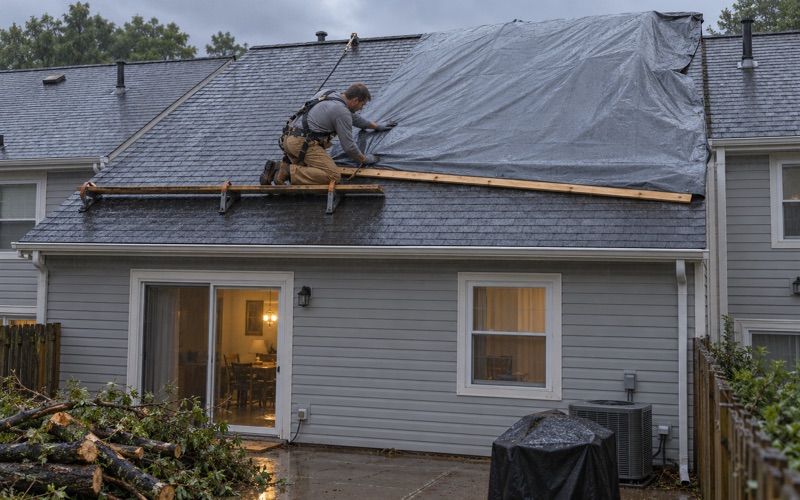
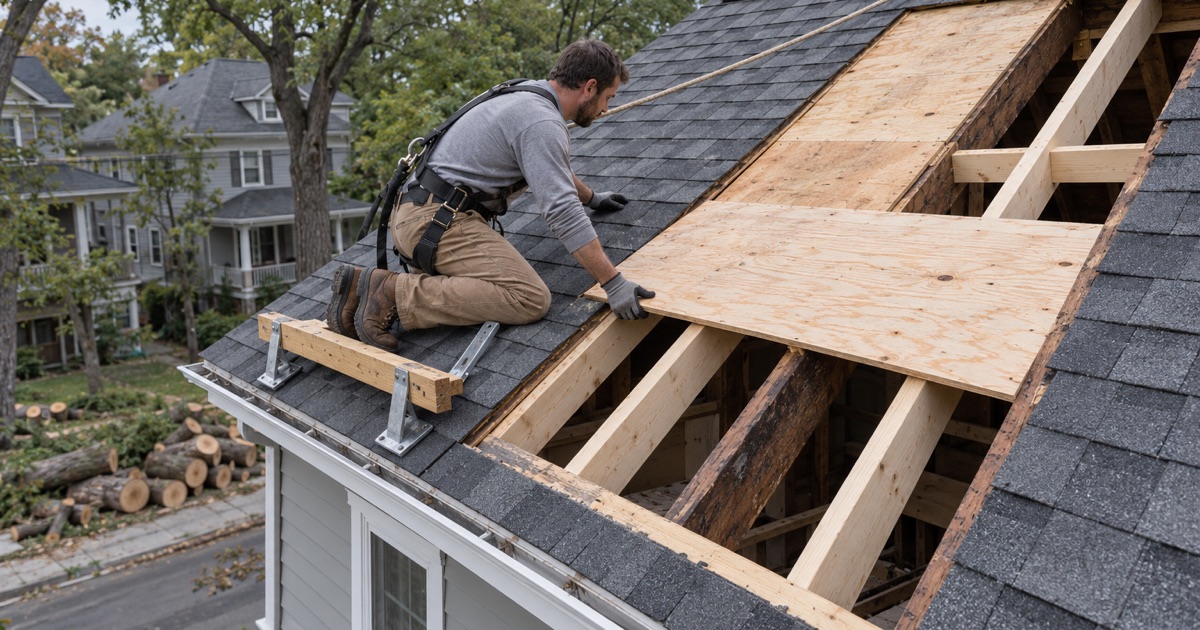
Once it is safe, the tree service and the roofer work in sequence. The tree comes off in sections, from the top down, so the roof does not take a second blow. While that happens we cover the opening with tarps fastened to sound decking, which keeps rain out of the attic until the repair is scheduled.
What the attic tells us
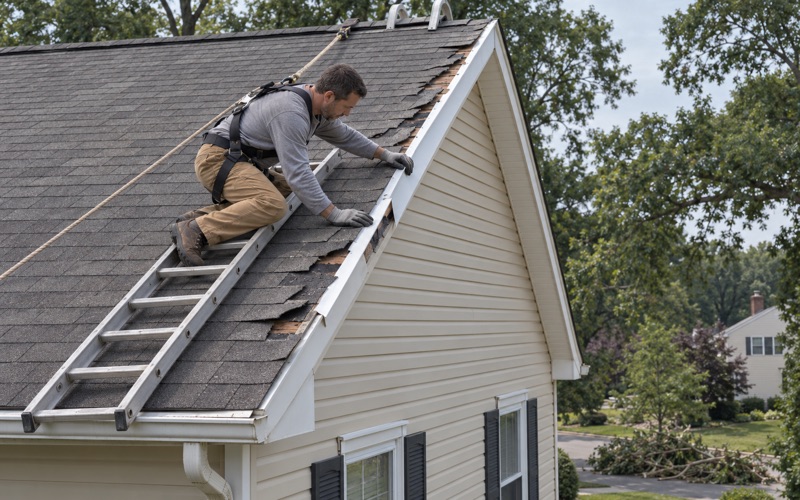
From outside, a dented roof can look like a few broken shingles. From the attic, the same spot may show a cracked rafter, a split sheet of decking or nails driven back through by the impact. We look at both sides before we price anything, so the estimate covers the damage that is actually there.
Damaged decking found once the old roofing is off is photographed and shown to you before it is replaced. The contract sets a per-sheet price for that decking up front, so a fallen limb does not turn into an open-ended bill. A cracked rafter is framing work, and the scope names it as a separate item.
Patch or replace after the fall
Plenty of fallen-limb roofs can be repaired. If the impact stayed within a few courses and the decking around it is sound, we rebuild that section with matching underlayment, shingles and flashing. We tell you that before replacement is ever mentioned.
Replacement makes sense when the damage spreads across a slope or the roof was near the end of its life anyway. In that case the written scope lists tear-off, decking, underlayment, flashing, ventilation and gutters as separate lines. Two estimates written that way can be compared item by item, which matters when a storm brings several contractors to one street.
Siding, shingles and roof edges torn by a short wind burst
Not every storm loss in Collingswood involved a tree. On Park Avenue, siding was ripped off the roof of a home, which shows how a short gust works on the edges and seams of a house. Those are the places we check even when nothing fell.
Lifted shingles and broken seal strips
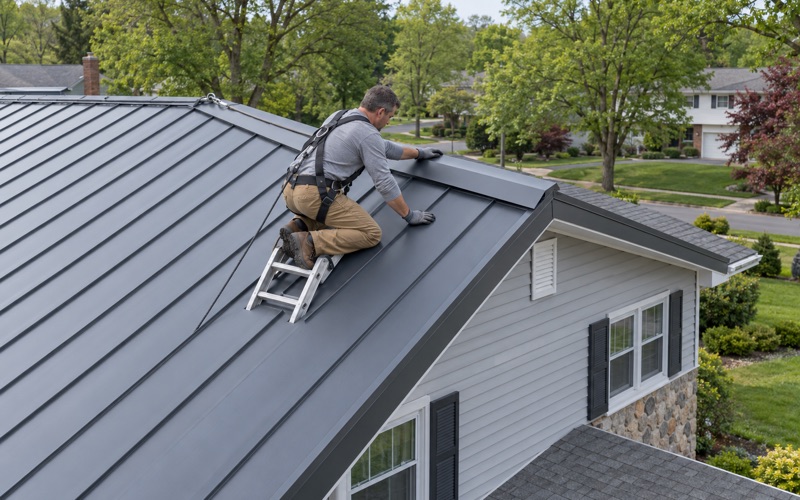
Asphalt shingles hold down in wind through a factory seal strip that bonds each course to the one below. A strong gust can break that bond without tearing the shingle off, and the tab then lies flat again, hiding the damage. We lift and check tabs along the rakes, ridge and eaves, where wind pressure is highest.
Where shingles have to be replaced, we specify products rated to ASTM D3161 Class F or ASTM D7158 Class H for wind resistance. Architectural shingles such as GAF Timberline HDZ, Owens Corning Duration and CertainTeed Landmark are sold with those ratings. Matching an older roof exactly is not always possible, and we say so before the work starts.
Edges, flashing and siding at the roof line
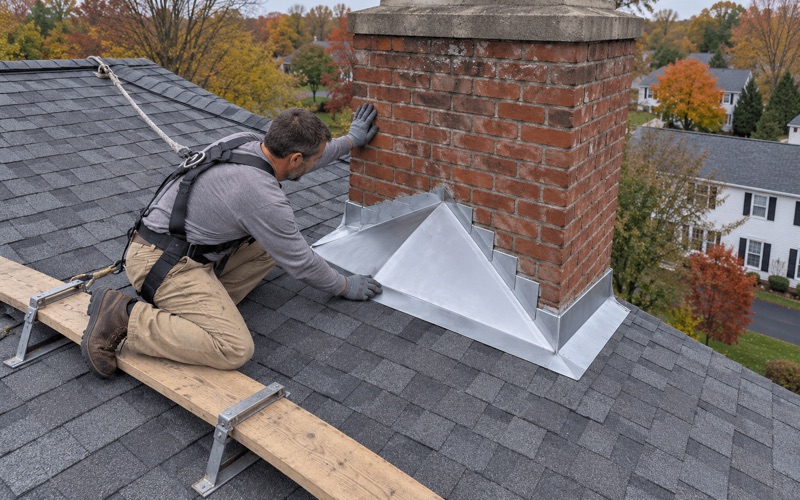
Wind gets under a roof at its edges first. A loose drip edge at the eaves or rakes gives a gust something to catch, and from there it peels shingles back. Where a wall meets a roof, step flashing, counter flashing and kick-out flashing tie the siding and the roof together, and a torn wall face often exposes them.
When we repair that kind of damage, the flashing is replaced with the roofing rather than reused under new material. Bent or torn metal that gets bedded back in place tends to leak at the next driving rain. If siding above a roof line came off, we coordinate with whoever replaces it so the flashing ends up behind the new siding, not over it.
Gutters pulled down by limbs
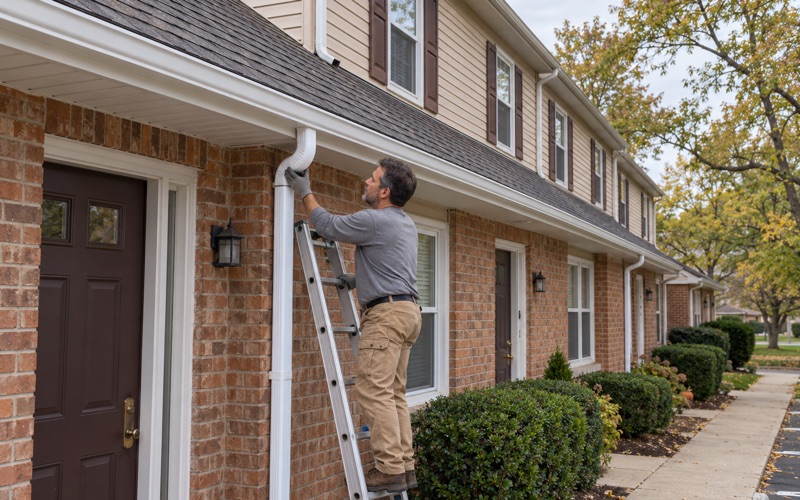
A falling branch that clips an eave usually takes the gutter with it. Gutters that hang by a few bent hangers stop carrying water, and the overflow runs down the fascia and into the wall. We check the fascia board behind them for splits before any new gutter goes up.
Gutters and downspouts are sized and pitched together with the roof, not added as an afterthought. Seamless aluminum gutters are the usual replacement, with downspouts placed to carry the roof’s runoff away from the house. At the end of each work day the driveway, yard and gutters are cleaned, including a magnet sweep for roofing nails.
Calling the borough, the insurer and a roofer after a storm
After the June 2017 storm, the fire chief advised residents with property damage to contact local government and their insurance agencies. That is still the right order. Here is where a roofer fits into it, and what we do and do not do.
The borough and the utility come first
Downed wires, trees across a street and limbs on power lines belong to the Borough of Collingswood and the utility, not to a homeowner or a roofer. Report them before anyone starts clearing. Once the street side is safe, the roof can be assessed and covered.
Collingswood sits in National Weather Service forecast zone NJZ018, Camden, served by the Mount Holly office. Following that zone’s warnings is a sensible cue to clear gutters and look for overhanging limbs before a storm rather than after it.
Your claim stays yours
We photograph storm damage and write it up for your own insurance claim, with each photo tied to the spot on the roof it shows. If you ask, our crew will meet your adjuster on site and walk the roof with them. We describe what we found; we do not negotiate the claim or promise what a policy will pay.
In New Jersey, negotiating a claim on a homeowner’s behalf is work for a public adjuster, not a roofing crew. Keeping that line clear protects you. The decision about coverage stays between you and your insurer, and our job is an accurate record of the roof.
A New Jersey contract for a New Jersey house
We work on both sides of the Delaware, and a Collingswood job is written to New Jersey rules, not the Pennsylvania ones that apply back in Bensalem. The two states treat contracts and sales tax differently, so the paperwork for your house follows the state it stands in. Where a replacement counts as a capital improvement, the New Jersey Form ST-8 certificate is part of that paperwork.
Before pricing we also check what the Borough of Collingswood itself asks of the job, because every municipality we serve sets its own rules. A storm repair should not stall on paperwork discovered halfway through. Settling that question at the estimate keeps the work moving once the tree is off and the tarp is down.
- 20+ Years Experience
- Attic Checked on Every Leak
- Itemized Written Scopes